The Backyard Birthday Playbook: Throwing a Party Kids Rave About Without the Venue Bill
Somewhere along the way, kid birthdays picked up an arms race: rented venues, hired characters, favor bags that cost more than my first apartment’s decor. I’ve been to those parties. My kids have loved those parties.
And after throwing our own version at home for years, I can report the strange secret from the other side: the parties kids still talk about a year later are almost never the expensive ones. They’re the ones with one great game, enough pizza, and a cake with their name on it.
So this is my playbook for the at-home version: how we plan it, what actually matters to the guest of honor, where the effort goes, and where it absolutely doesn’t. I’m not going to tell you what to spend, because that’s your call and your family’s math; this is about where the effort and attention land, which turns out to matter far more than the receipt.
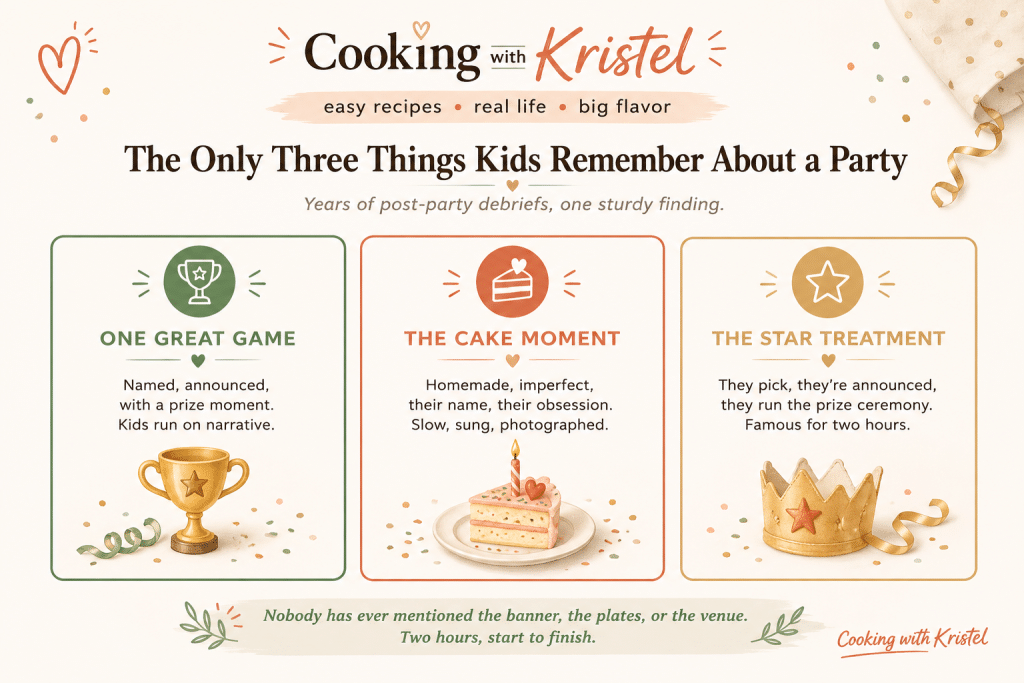
The Only Three Things Kids Remember
Years of post-party debriefs with my own kids and their friends have produced a finding sturdy enough to build on. Kids remember exactly three things about a birthday party: one standout activity, the cake moment, and whether the birthday kid seemed like the star. That’s the entire list.
Nobody has ever mentioned the banner quality, the plate theme, the favor bags (more on those later), or the venue. Which means the playbook writes itself: pour the attention into one great game, one personal cake, and making the kid feel famous for two hours, and everything else can relax.
The Planning Timeline (Two Weeks, Not Two Months)
| When | What happens | The honest note |
|---|---|---|
| 2 weeks out | Kid picks the theme; invites go out | Theme = a color, a creature, an obsession. Not a licensed shopping list |
| 1 week out | Plan the one big game + the menu | One game planned well beats five planned barely |
| 3-4 days out | Shop once, off one list | The second shopping trip is where budgets go to die |
| Day before | Bake the cake, prep the food, stage the house | All of it, so party day is assembly only |
| Party day | Two hours, start to finish | Two hours is the magic number; three is a hostage situation |
The two-hour ceiling is the most underrated line in that table. Short parties end while everyone’s still having fun, which is precisely what gets remembered, and they compress the food problem down to one snack window and cake instead of a full catering operation.
The One Great Game
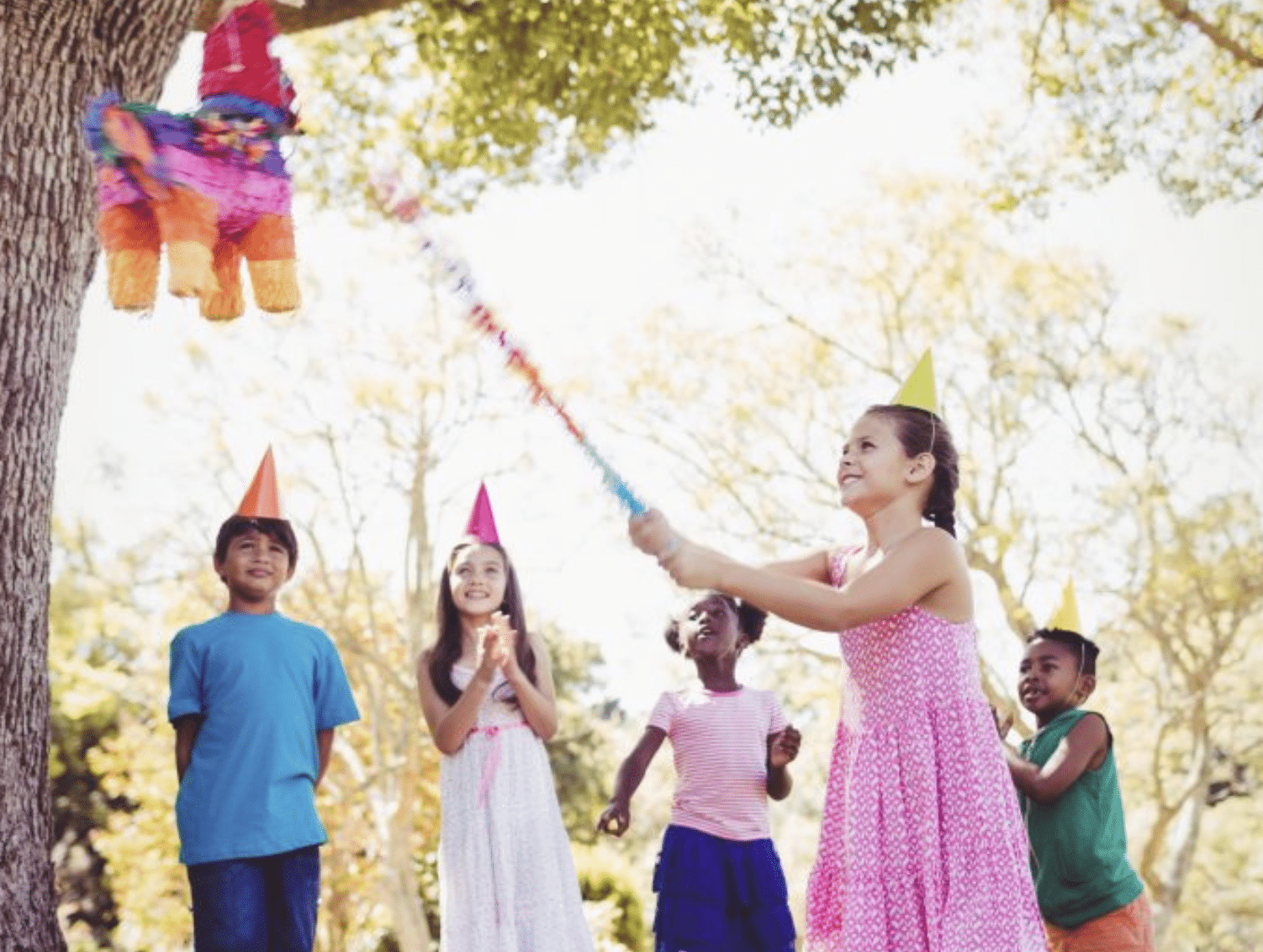
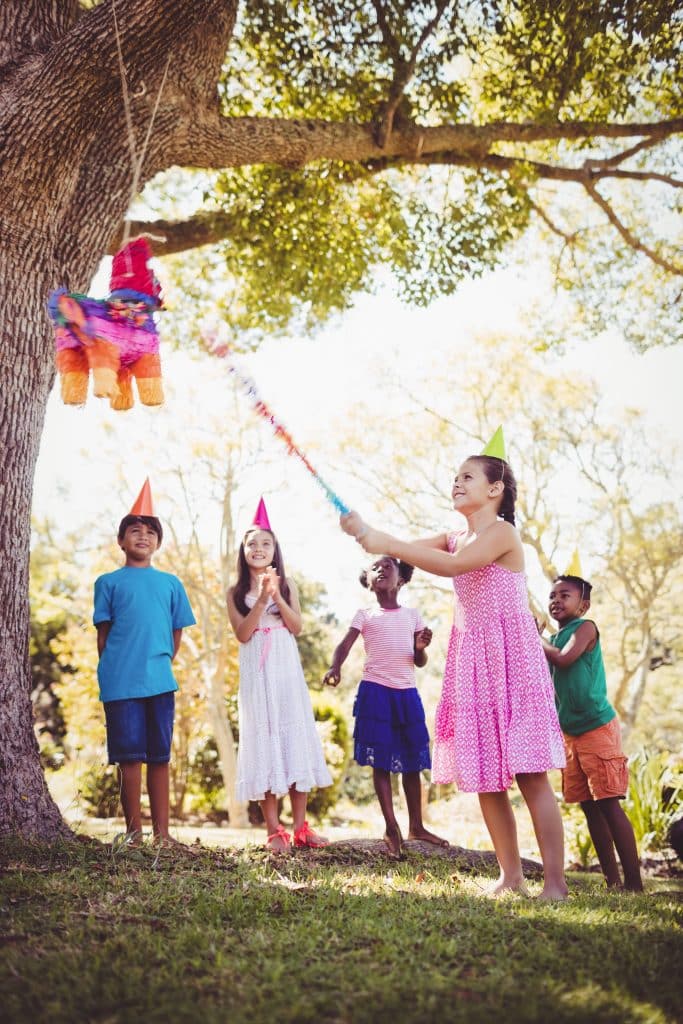
The standout activity at every successful party we’ve thrown has been embarrassingly analog: a treasure hunt with actual clues, a water-balloon showdown, a decorate-your-own-something station, an obstacle course built from what the garage already contained.
The pattern is that kids remember games with a story or a stake, not equipment. A treasure hunt where the “treasure” is the favor stash costs almost nothing and runs twenty glorious minutes; I’ve watched it outperform a bounce house at one-fiftieth the footprint.
The staging trick that makes any game feel bigger: give it a name, an announcement, and a prize moment. “The Great Backyard Egg Rescue” with a dramatic countdown is an event; the same game without the theater is just eggs. Kids run on narrative. It’s free.
Feeding a Party Without Catering It
Party food has one job: keep small people fueled without pulling the host into the kitchen for the whole event. Our formula is a snack spread out from the start, one main food moment, and cake. The snack spread leans hard on prep-ahead produce, and honestly the road-trip snack lineup doubles as a party spread almost item for item, since both were engineered for the same audience: kids, in motion, with opinions.
Fruit gets demolished at parties when it’s cut and grabbable, the same counter-psychology from the fruit my kids grab instead of snacks, scaled up to a crowd. Add something dippable, something crunchy, and the main moment (pizza, a taco bar, or a big pot situation off the one-pot lineup for cold-weather birthdays), and the food is done.
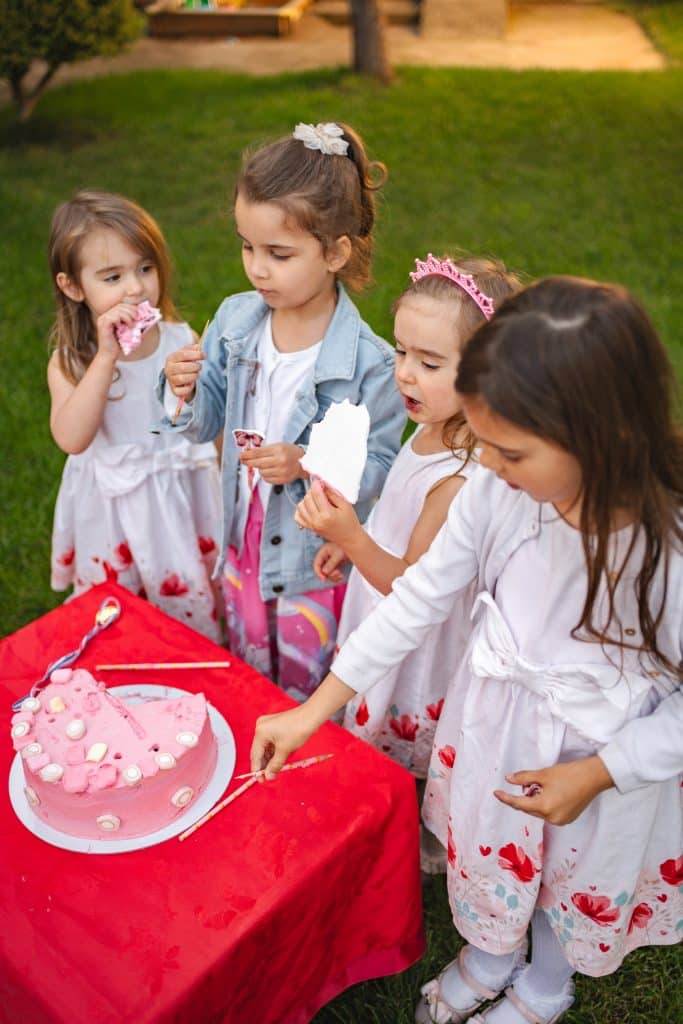
The cake is the one place I always spend effort, because it’s one of the three things on the memory list. Effort, not necessarily money: a homemade cake decorated imperfectly with the kid’s current obsession beats a bakery masterpiece in the debrief every single time, because the memory isn’t the frosting quality, it’s “my cake.”
My decorating skills remain modest. My kids’ cake reviews remain five stars. These facts are related.
The Contingency Layer: Weather, Guest Math, and Siblings
Backyard parties need a plan B, and the plan B rules are short. The rain pivot is decided before invites go out, not the morning of: our version is that the one great game has an indoor translation (the treasure hunt moves inside and gets harder; the decorate-a-thing station never cared about weather), the food doesn’t change at all, and the two-hour ceiling drops to ninety minutes because indoor kid-density is a different physics. Naming the pivot in advance turns a rained-out party from a crisis into a variant.
Guest math is the other quiet make-or-break. The old rule of thumb, age plus one guest, exists because it’s roughly right: a smaller crowd means the birthday kid actually plays with everyone, the game runs controllably, and the star treatment stays concentrated where it belongs. The biggest parties we’ve thrown were the ones the guest of honor enjoyed least, because a big enough crowd turns the birthday kid into a host, and no seven-year-old wants to be a host.
Whole-class invites are sometimes socially unavoidable, and when they are, the fix is structure: more of the party gets scheduled, the game runs in heats, and the two hours become ninety minutes, because crowd size and duration have to trade against each other or the whole thing tips.
Siblings of guests, the classic wildcard: our standing policy is that they’re welcome, counted in the food math, and handed jobs. A guest’s older sibling running the game’s stopwatch is a party asset; the same kid unassigned is a variable. Everything at a kid party goes better with a job attached, adults included.
The Favor Bag Rebellion
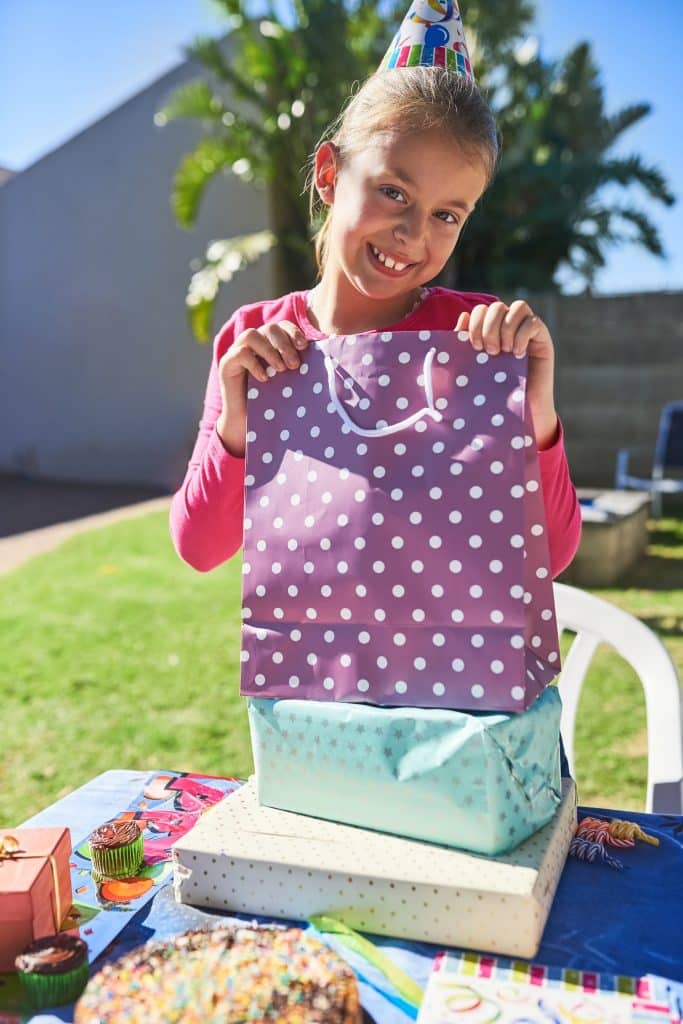
I’ll say the thing: favor bags are a tax parents pay each other, filled with plastic that every receiving parent privately resents. We stopped, and the replacement is better in every direction: the party’s craft or decorated item IS the take-home, or the treasure hunt’s findings are, which means the favor is a thing the kid made or won instead of a bag of obligations.
Not one child has ever filed a complaint. Several parents have sent thank-you texts.
The Star Treatment (The Free Part That Matters Most)
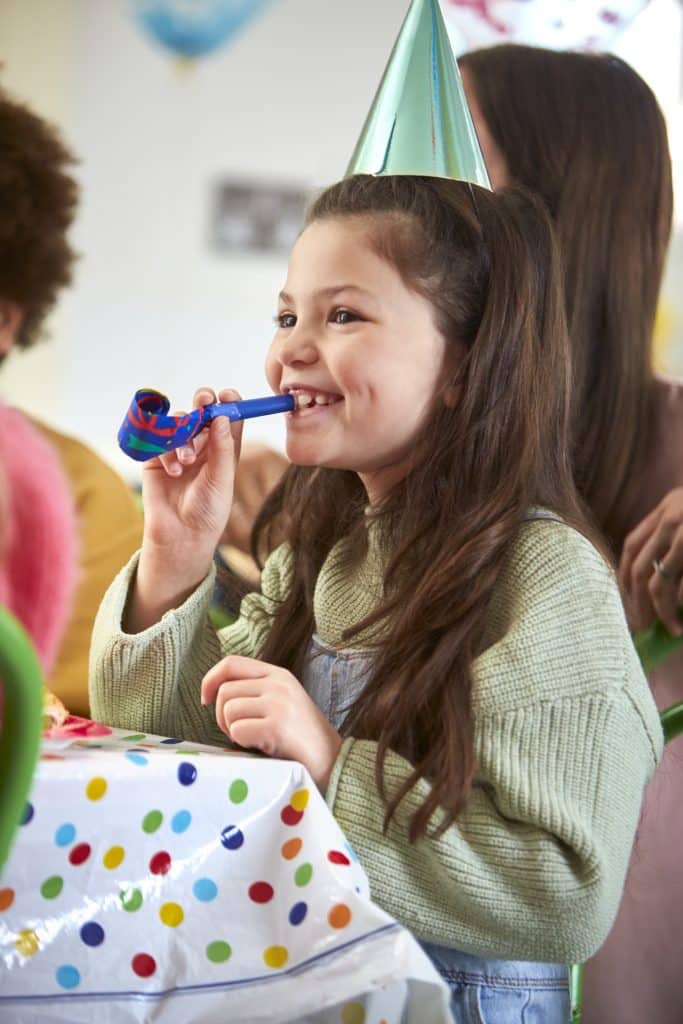
The third memory item costs nothing and gets skipped at fancy parties constantly: the birthday kid needs to visibly be the point. In our playbook that means they pick the theme and the game, they get announced into their own party like a prizefighter (my kids request this now), they run the game’s prize ceremony, and the cake moment is slow, sung, and photographed instead of rushed.
What Everyone's Making
23 Plant Foods That Fill You Up for Hours (My Afternoon Slump Fix) →
Two hours of being the main character in their own house, with their people, beats any venue’s package, and I say that as someone whose kids have enjoyed plenty of venues. The venue makes the party bigger. The star treatment makes it theirs.
The playbook’s whole finding, after years of running it: the memorable party was never a purchasing decision. It’s one great game with a name, a cake with their name, two hours, and a kid who felt famous. Everything else is for the adults, and the adults would honestly rather have the shorter party too.
Keep reading: 15 Mom Life Hacks That Actually Save Time covers the day-to-day version of this same effort-where-it-counts philosophy, and 23 Plant-Based Road Trip Snacks is, as noted, secretly a party-spread list in disguise.