
Starting Plant-Based Without Starting a Family Rebellion: My Gentle-Ramp Guide
Let me tell you what didn’t work first: announcing a food philosophy at dinner. If you’d like four family members to develop sudden deep attachments to foods they previously ignored, announce that those foods are changing. Ask me how I know.
What did work was so gradual that honestly, nobody noticed for months. This is my gentle-ramp guide to bringing more plant-based eating into a regular family kitchen: no labels, no announcements, no pantry purge, and no pretending it happened overnight.
One honest note before we start: I’m a home cook sharing what worked in my house, not a dietitian. Big changes to how kids eat, or any eating change involving a health condition, are conversations for your pediatrician or doctor first. Everything below is kitchen strategy, not nutrition advice.
Step Zero: Don’t Announce Anything
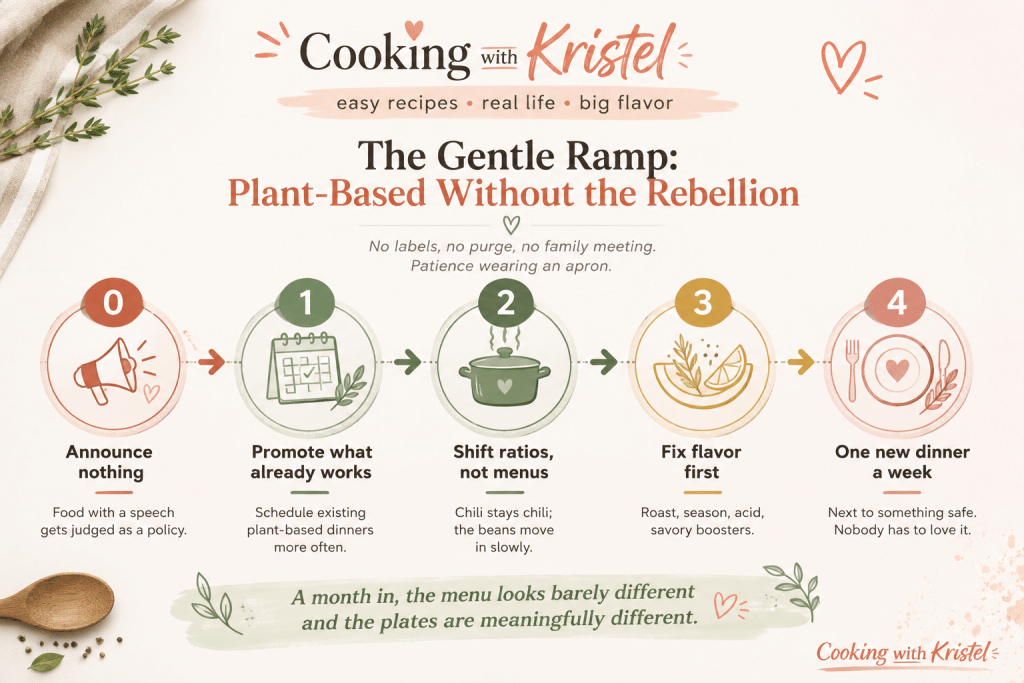
The single most useful thing I did was keep my mouth shut. No “we’re going plant-based now,” no explaining, no new vocabulary at the table. Food that arrives with a speech gets evaluated as a policy; food that just shows up gets evaluated as dinner.
Every step below runs on this principle, and the day my kids asked for one of the “new” dinners by name, months in, without knowing it belonged to any category, was the day I knew the quiet approach had won.
Step One: Promote What’s Already Working
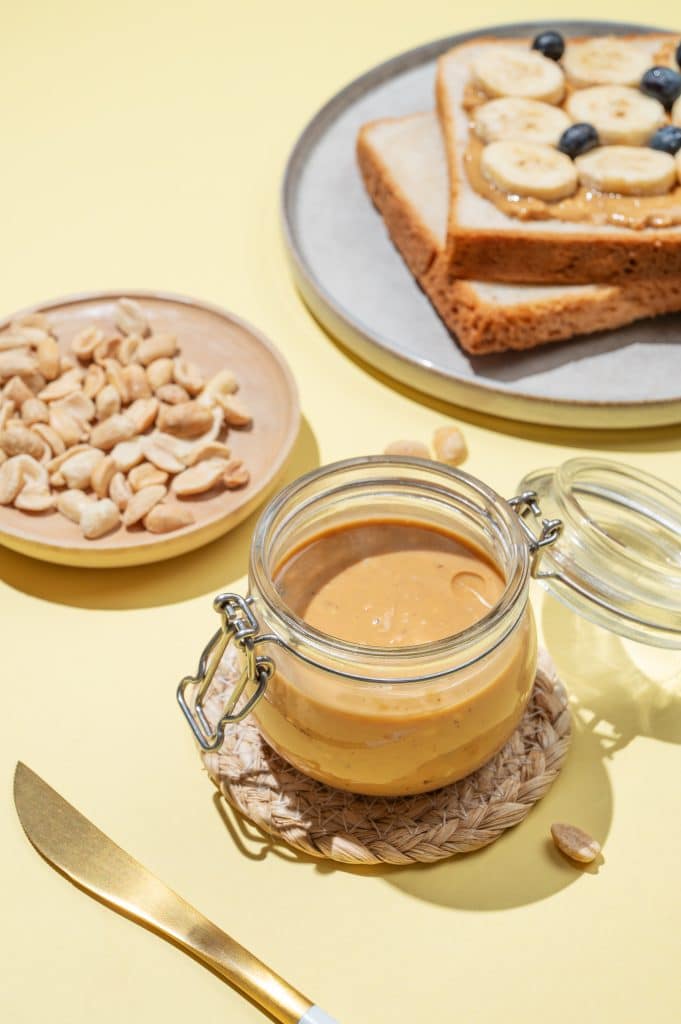
Every family already eats plant-based meals without calling them that. Pasta with tomato sauce. Rice and beans. Peanut butter everything. Vegetable soup. Minestrone night. Your first move costs nothing: notice those meals and simply schedule them more often.
One More Bite
27 Tiny Mailable Gifts I Send My Mom Friends →
25 Vegetables That Taste Completely Different Depending on How You Cook Them →
We went from maybe two incidental plant-based dinners a week to four this way, with zero new recipes and zero resistance, because nothing was new. The only change was frequency, and frequency is invisible.
Step Two: Shift the Ratios, Not the Menu
The second move is inside dishes the family already loves: keep the dish, move the proportions. Chili keeps its name and gains a second kind of bean while the meat shrinks a little each time. Tacos stay tacos while lentils move in alongside. Stir-fry stays stir-fry with more vegetables and cubed tofu getting crispy in the corner of the pan. The dish’s identity does all the diplomatic work, and the dish’s identity never changed.
Early Black Friday
Early Black Friday Deals and Coupons
Sales running right now at stores families already shop.
Affiliate links: I may earn a small commission at no extra cost to you.
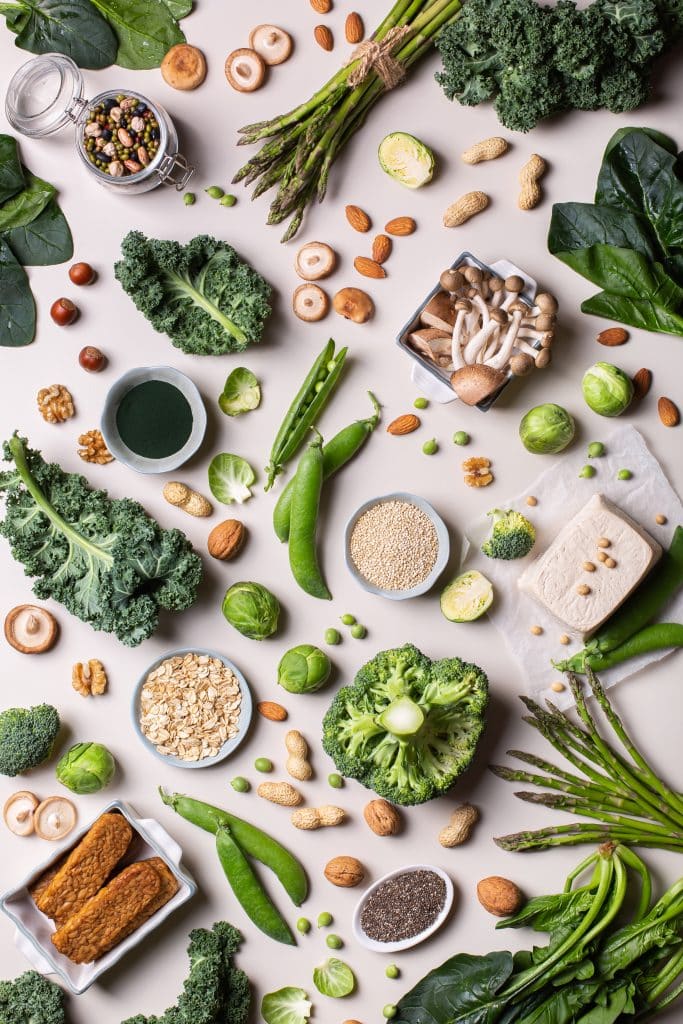
This is where cheap plant proteins earn their reputation, because the dirt-cheap plant foods that secretly pack massive protein are mostly things kids already accept in the right container: beans, lentils, peanut butter, tortillas’ best friends.
And for the vegetable half of the ratio shift, the sneaking arts are a legitimate school of cooking in this house; the sneaky plant-based foods you can hide in any kid’s dinner and the produce I sneak into dinner without anyone noticing are the field manuals.
The ratio shift in practice, from my actual rotation:
| The dinner | What stays | What shifts, gradually |
|---|---|---|
| Chili night | The name, the toppings, the ritual | Second bean in; meat halves over a month |
| Taco night | Shells, fixings, self-assembly | Lentils or seasoned black beans join, then lead |
| Spaghetti night | The sauce, the noise | Sauce gains blended veggies; meatballs go half-bean |
| Stir-fry night | The sauce and the rice | More vegetables, crispy tofu cubes appear in a corner |
| Soup night | Already mostly there | Broth goes veggie; beans bulk it up |
| Pizza night | Pizza night is sacred | Veggie toppings expand; nothing else changes |
The last row matters as much as the first five. Leaving some meals completely alone is part of the strategy, because a table where everything is shifting feels like a table under negotiation, and kids negotiate back.
From My Kitchen
25 Vegetables That Make the Best One-Pan Dinners in My House →
“Weeknight-tested, more times than I can count.”
Step Three: Fix the Flavor Problem Before It Starts
Here’s where most families’ plant-based experiments actually die: not on principle, on blandness. A dinner that lost its usual richness and gained nothing reads as punishment, and kids sniff it out in one bite.
So the flavor toolbox comes BEFORE the ambitious recipes. Roasting instead of steaming, which is the whole argument behind the fruits and veggies I always roast instead of steaming and easily the biggest single upgrade available to any vegetable. Real seasoning, more than feels polite. Acid at the end. The savory boosters: soy sauce, tomato paste, nutritional yeast, mushrooms.
You'll Want This Too
Get that toolbox working and you end up with vegetables so full of flavor nobody misses the cheese, which is a sentence I wouldn’t have believed before I learned to cook them right, a journey I documented with full embarrassment in the vegetables I finally learned to cook after years of ruining them.
Step Four: One New Dinner a Week, Next to Something Safe
Only now, with the easy wins banked and the flavor toolbox running, do genuinely new dinners enter. The rules that kept it peaceful in my house: one new dinner a week, never more. Something familiar always on the table next to it, so no one’s night depends on the experiment.