Stocking a Family Pantry From Scratch: What I’d Buy First, Second, and Never
When we moved into this house, I stood in an empty pantry and did what everyone does: printed a giant “pantry essentials” checklist off the internet and bought most of it. Two years later I threw away a shocking amount of that first haul, unopened. Specialty vinegars, five kinds of flour, things a list told me every kitchen needs that my kitchen has never once needed.
So this is the guide I wish I’d had: how to stock a pantry in layers, starting with the twenty things that actually run a family kitchen, and how to figure out your house’s real list instead of the internet’s.
Layer One: The Workhorses (Buy These First)
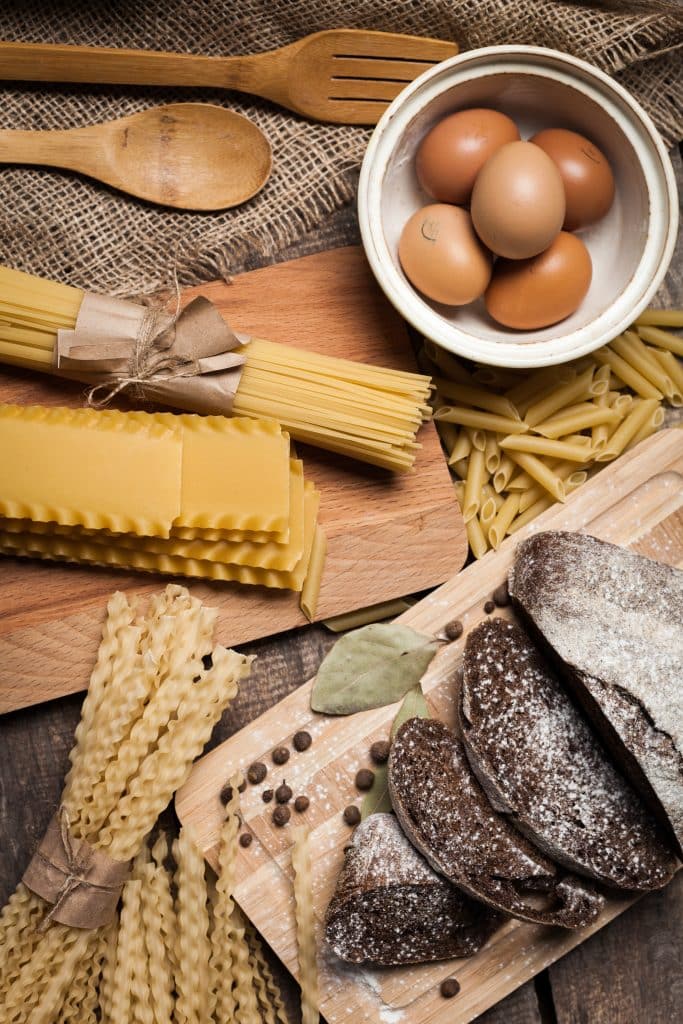
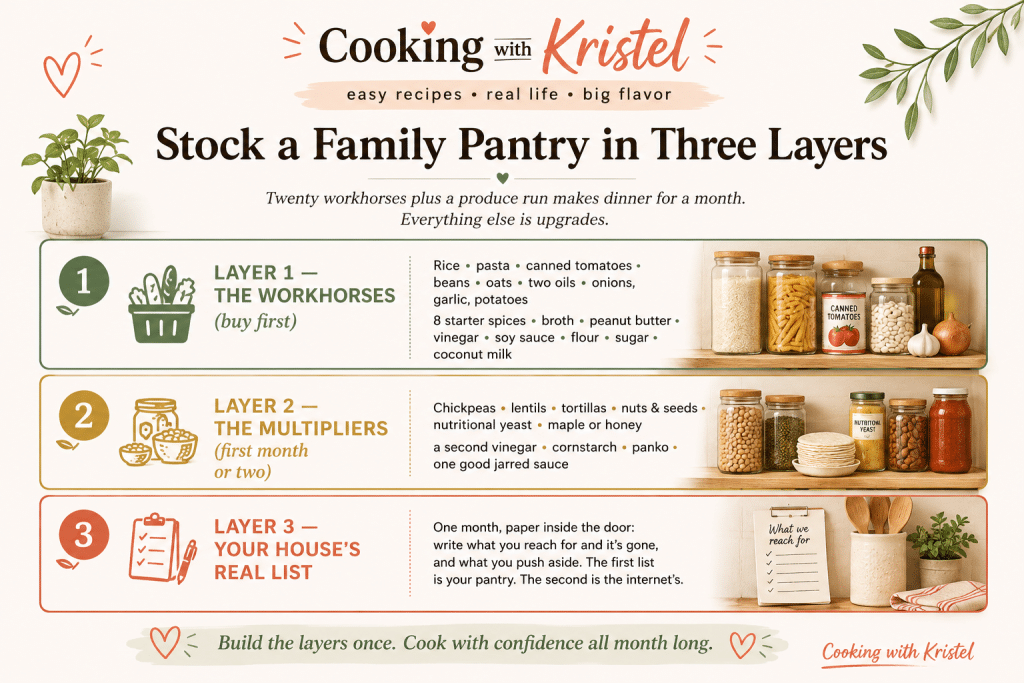
If my pantry burned down tomorrow, this is the rebuild order. Rice and pasta, because they’re the floor under half our dinners. Canned tomatoes, more than feels reasonable, since they’re the start of soup, sauce, chili, and every “I have no plan” dinner I’ve ever rescued.
Canned and dried beans, which do heavy lifting in this house both as dirt-cheap plant protein and as the thing that stretches any dinner by two servings. Oats. A cooking oil and an olive oil. Onions, garlic, and potatoes in the cool corner, which are technically produce but functionally pantry, and three of the staples I buy weekly without checking any list.
Salt, pepper, and a starter spice shelf of maybe eight jars: cumin, chili powder, paprika, oregano, cinnamon, garlic powder, curry powder, red pepper flakes. Broth or bouillon. Peanut butter. A vinegar, one, not five. Soy sauce. Flour and sugar in ordinary amounts.
Canned coconut milk, which in my dairy-free kitchen is less an ingredient than a utility, doing the work I detailed in the fruits and vegetables doing the heavy lifting in my dairy-free kitchen.
That’s roughly twenty items, and here’s the claim I’ll stand behind: that list plus a produce run makes dinner every night for a month without repeating itself too badly. Everything else in a pantry is an upgrade, not a requirement.
Here’s layer one as an actual shopping list, with the honest reason each item earns its shelf:
| Item | Why it’s layer one | Where it shows up |
|---|---|---|
| Rice + pasta | The floor under half our dinners | Everything |
| Canned tomatoes (lots) | Soup, sauce, chili, rescue dinners | The “no plan” saves |
| Beans, canned + dried | Cheap protein, dinner-stretcher | Chili, tacos, soups |
| Oats | Breakfast + baking + meatball binder | Mornings, mostly |
| Two oils (cooking + olive) | The fat jobs | Everything |
| Onions, garlic, potatoes | Produce that acts like pantry | The start of every pot |
| Starter spice shelf (8 jars) | Flavor floor | See below |
| Broth or bouillon | Soup floor, rice upgrade | Weekly |
| Peanut butter | Protein, snacks, sauces | Daily, honestly |
| One vinegar + soy sauce | The acid and savory jobs | Dressings, stir-fry, fixes |
| Flour + sugar | Ordinary baking amounts | Weekends |
| Canned coconut milk | The cream jobs, dairy-free | Curries, soups, sauces |
And the starter spice shelf, since “some spices” is how people end up with either three jars or forty: cumin, chili powder, smoked paprika, oregano, cinnamon, garlic powder, curry powder, red pepper flakes.
Those eight cover Mexican-ish, Italian-ish, curry-ish, and cozy-baking-ish, which is most of what a family kitchen actually cooks. Every spice past eight should be hired by a specific recipe, not by a checklist.
Layer Two: The Multipliers (Add Within a Month or Two)
The second layer doesn’t unlock new meals so much as it makes the first layer better and faster. Canned chickpeas beyond the basic bean rotation. Lentils, the fastest dried legume and the base of half my soup lineup. Tortillas and a backup bread in the freezer.
Nuts and seeds, which double as the kind of snacks that fix an afternoon slump. Nutritional yeast, which sounds like a health-store dare and is actually the reason so many vegetables in this house taste great without cheese.
Maple syrup or honey. A second vinegar, now that you know which flavors your house leans toward. Cornstarch. Panko. A jarred sauce or two you genuinely like, filed under survival-night insurance rather than cooking.
Layer Three: Your House’s Actual List
Here’s the part no printable checklist can do. For one month, keep a scrap of paper inside the pantry door and write down two things: every time you reach for something and it’s gone, and every time you push something aside to reach around it. At the end of the month, the first list is your real pantry, the one your actual cooking uses. The second list is the stuff the internet sold you.
My reach-for list turned out to be embarrassingly heavy on canned tomatoes, coconut milk, and chickpeas. My push-aside list had an entire international-condiments museum from my ambitious phase. Your lists will be different, and that’s the whole point: a pantry should be stocked by your last hundred dinners, not by a stranger’s checklist, including mine.
Setting It Up So It Stays Stocked
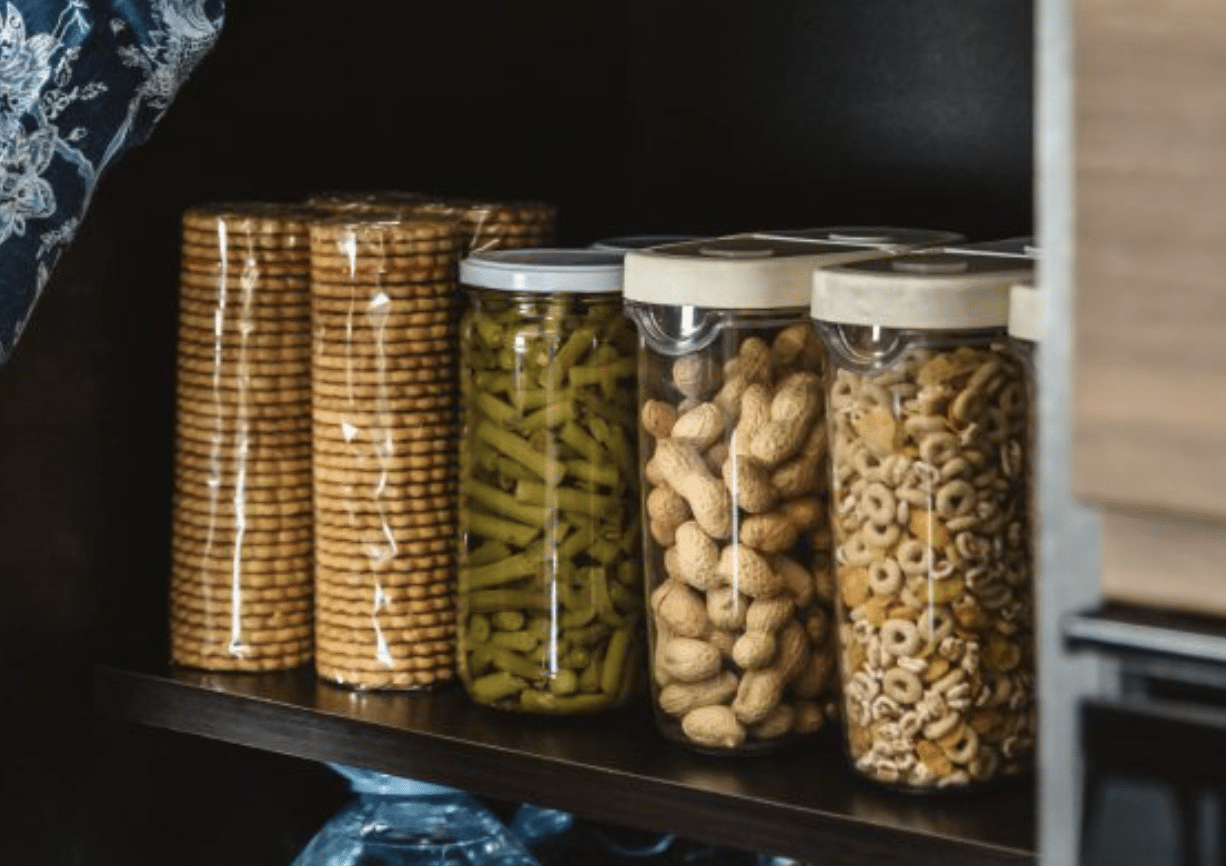
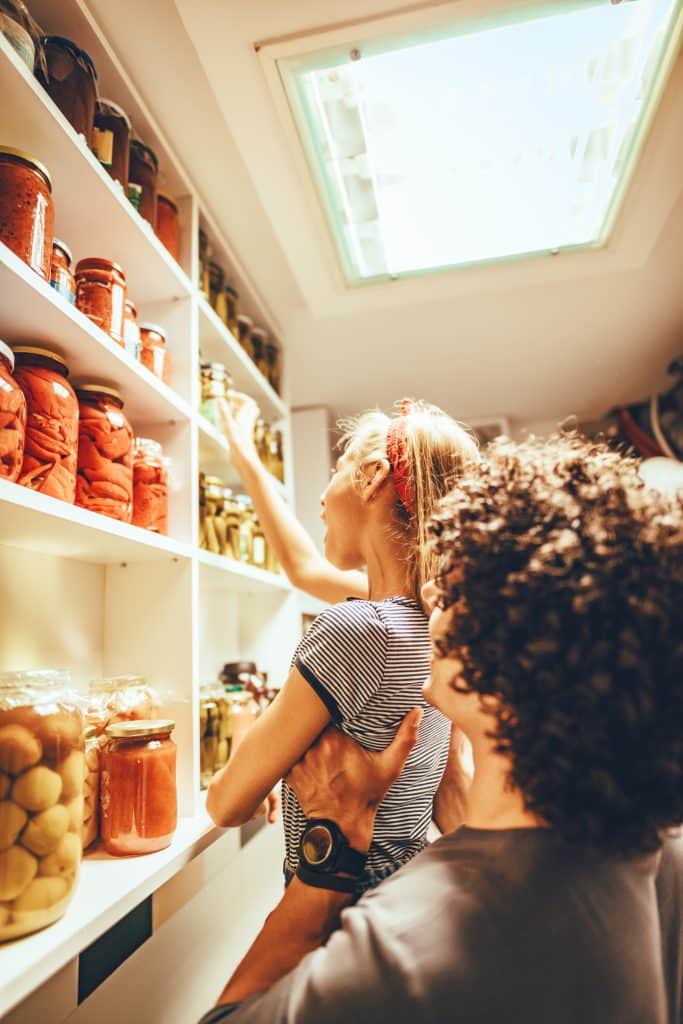
A quick word on the physical setup, because organization is where pantry advice usually gets expensive and mine won’t: you need almost nothing. Clear containers for the workhorses are the one purchase I’d defend, not for the aesthetic but because opaque packaging is where staples go to be forgotten, and seeing the rice get low IS the inventory system.
Everything else is zones, which are free: cans together, baking together, the snack shelf where kids can reach it (strategically stocked, which is its own quiet parenting move, the pantry version of keeping fruit on the counter where kids grab it instead of snacks), and the tall stuff in back. Ten minutes of zoning does more than a hundred dollars of matching bins.
The companion system lives in the fridge and on the counter: the pantry handles the bones, and the weekly produce rotation handles the rest. My produce baseline barely changes week to week, which is the entire subject of the staples I buy every week without checking the list, and the pantry is what lets that produce become dinner instead of becoming waste; the budget-protecting produce lineup works precisely because there are always beans, rice, and canned tomatoes waiting to turn it into a meal.
What I Never Restock Anymore
In the interest of saving you my mistakes: specialty flours bought for single recipes (buy them when the recipe is actually happening), any condiment that requires a plan to use, the giant bulk sizes of things we use slowly (a huge bag of a spice you touch twice a year goes stale, not saved), and duplicate “backup” jars of slow movers, which is how I ended up owning four open mustards.
Bulk sizes earn their spot only on genuine workhorses: our rice, oats, and canned tomatoes buy big; nearly everything else buys normal.
Keeping It Running
The system that maintains all this is almost insulting in its simplicity: the paper on the door stays there forever, and anything written on it gets bought on the next trip. First in, first out, new cans behind old ones.
And once a season, a fifteen-minute shelf sweep where anything I’ve pushed aside for three straight months gets used deliberately that week or leaves. The pantry stays about eighty percent boring workhorses and twenty percent fun, and honestly, the eighty percent is what dinner actually runs on.
A stocked pantry’s real job isn’t abundance, it’s making the twenty-minute Sunday meal plan possible: when the bones of dinner are always in the house, planning shrinks down to picking which produce dresses them up this week, and the vegetables hearty enough to be the whole meal plus a full pantry can carry a family through pretty much anything a week throws at it.
Keep reading: 29 Dirt-Cheap Plant Foods That Secretly Pack Massive Protein is the budget backbone of layer one, and 25 Fruits and Veggies That Make Vegan Cooking Cheaper Than You’d Think covers the produce half of the same math.