

How My Family Actually Saves Money Every Month (The Small Habits That Stuck)
People ask me all the time how we feed a house full of picky eaters, keep the lights on, and still get a night out now and then without the budget falling apart. The honest answer is boring. It was never one big dramatic change, just a pile of small habits that add up over a year.
None of this is about deprivation, and I’m not going to tell you to give up your coffee. The picky-eater side of dinner has its own home in my picky eater playbook, the meals that finally ended our dinner fights, so this guide sticks to the money.
Below are all 25 habits that moved the needle for us, grouped by where the money was leaking: the kitchen, the utility bills, the phone calls I dreaded, and the grown-up paperwork I put off for years. After that, I walk through how I run our budget month to month, with a rough table of what each change tends to be worth.
How I Think About Saving Money With Kids in the House
My rule is simple: try a change without announcing it and see if anyone notices. If nobody in my house says a word after two weeks, the change stays. If my youngest stages a protest, I rethink it.
I also stopped chasing big, heroic money moves. The no-spend month everyone swears by lasted about nine days in our house, and then I ordered pizza out of pure spite. Small, boring habits stick for me, and dramatic ones don’t.
Most of our savings start in the kitchen, because that’s where I spend the most and waste the most. The backbone is the Sunday plan I lay out in my meal planning system for real families, and yes, some weeks I skip it and pay for it by Thursday.
The other thing I’ve learned is that every savings habit drifts. Rates creep up, subscriptions sneak back in, and the grocery list gets lazy. That’s why the back half of this guide is about the routine that keeps everything from sliding backward.
Where Our Grocery Money Was Leaking

Cook From the Pantry Once a Week Before You Shop
Every Sunday before I write a grocery list, I do a lap through the pantry and the freezer. It takes about five minutes. It also stopped me from buying a fourth box of pasta and yet another can of crushed tomatoes, which used to happen constantly.
Once a week, dinner gets built only from what’s already in the house. My kids call it mystery pantry night and love guessing what it’ll turn into, and the answer is often something from my list of soup recipes my family asks for, because a pot of soup forgives almost any combination.
When a recipe calls for one thing I don’t have, I check my ingredient substitution finder before I add it to the list. Buying a whole bottle of something for two teaspoons is exactly how pantries fill up with food nobody finishes.

Batch Cook One Big Meal Every Weekend
Takeout on the nights nobody felt like cooking was our biggest leak, and it wasn’t close. So one weekend afternoon, I cook something big: a pot of soup, a grain bowl base, or a tray of chicken from my one-pan sheet pan dinners.
I portion it into containers for lunches and freeze the rest, the way I explain in my freezer meal guide. Some weeks I only manage half of that plan. Half still beats a delivery fee.

Swap to Store Brand on the Boring Stuff
Flour, canned beans, rice, spices, and cleaning supplies all went store brand in my house without a single comment. My test is the same one I use for everything: swap it, wait, and see if anyone says a word. Nobody ever has.
I did keep a couple of name-brand items where the kids can taste the difference, like the cereal my oldest is fiercely loyal to. Every other swap and cut is in my list of grocery buys I cut once I became a mom.
One honest note about the warehouse club, since I’m a regular: bigger isn’t automatically cheaper. A giant bag of something that goes stale halfway through costs more than the small one would have.
These days I only buy bulk on things we actually finish, like rice, frozen vegetables, and butter. I believe in butter, so that one never goes to waste.
The Utility Fixes That Took One Afternoon Each
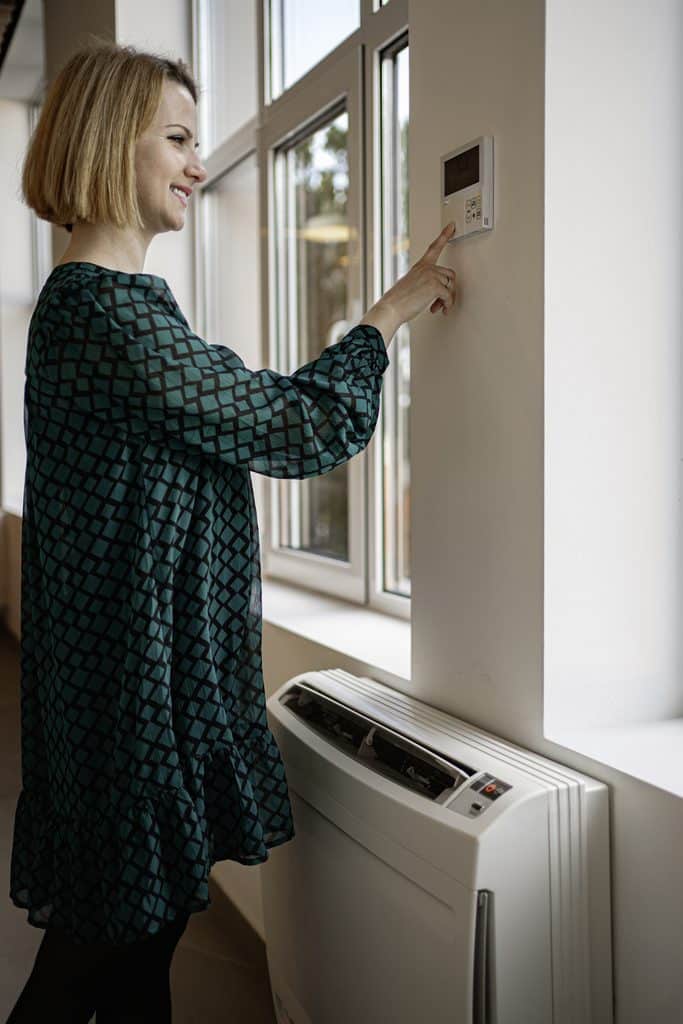
Put the Thermostat on a Schedule
Heating and cooling make up the biggest piece of our energy bill, and we used to run them full blast while the house sat empty. Now the thermostat sets itself back a few degrees while we’re out and while we sleep. Nobody has complained about being cold.
A basic programmable thermostat doesn’t cost much, and some utility companies offer rebates on the fancier ones, so check before you buy. I also keep furniture off the vents and change the furnace filter on a schedule, because a clogged filter makes the whole system work harder for the same result.

Seal Up Drafty Doors and Windows
Our old front door had a gap you could almost see daylight through. My husband held a lit candle near the edges on a windy day, and the flame leaned sideways like it was trying to leave.
Weatherstripping tape and a door sweep cost less than one takeout night and took a single afternoon to put on. The candle test now has a permanent spot on my list of mom life hacks that actually save time.
While you have the candle out, try the outlets on outside walls and anywhere a pipe comes through. Those leak more air than you’d guess.
An incense stick works too, and the smoke trail is easy to read. Whichever you use, keep the flame well away from curtains.
The rest of the house fixes were smaller, and a little dull, so here they are in one place.
| Fix | What I did | Time it took | Rough cost to do it |
|---|---|---|---|
| Unplug what you’re not actually using | Put the TV, the old game console, and the chargers on one power strip that gets switched off at night | About 10 minutes | A few dollars for the strip |
| Turn the water heater down a notch | Lowered the dial hiding behind a small panel; nobody noticed in the shower | About 5 minutes | Free |
| Run the big appliances at off-peak times | Use the delay-start button on the dishwasher and washer so they run overnight | About 2 minutes | Free (only helps on time-of-day rate plans) |
| Track down the leaks you can’t see | Food coloring in the toilet tank found a worn flapper; checked faucets for drips | One afternoon | Usually an inexpensive part |
| Give the roof and attic some attention | Checked insulation depth and made sure the attic vents weren’t blocked | One afternoon | Free to look; repairs vary a lot |
Rough ranges only; costs depend on your home, your area, and the store.
The water heater change is a safety thing with little kids around, too, since scalding tap water is a real risk. A lot of families land around 120°F. If yours is older, an insulation blanket helps it hold heat without running as often.
Unplugging things sent me straight to the countertop, which is how I ended up writing about the things my kitchen doesn’t need anymore. I’m suspicious of single-use gadgets on a good day, and the ones gathering dust were sitting there plugged in for no reason.
For the leak hunt, drop a little food coloring in the tank, wait without flushing, and watch the bowl. If color shows up, the flapper is leaking. A weirdly high water bill one month is what sent us looking, and the fix was about as easy as home repairs get.
The roof is the one we waited too long on. Worn shingles and thin attic insulation let warm and cool air escape all year, and our bills were telling us long before we listened.
The Phone Calls and Audits That Saved Us the Most
Audit Every Single Subscription, Not Just the Obvious Ones
This one shocked me. I sat down with two months of bank statements, listed every recurring charge, and found subscriptions I’d completely forgotten about, including a free trial that had turned itself into a monthly bill months earlier.
App store charges are the sneakiest because they don’t always look like a normal purchase, so I check the subscription list in my phone’s settings directly. Those little charges add up faster than they look on paper.
My rule now: if I haven’t used it in the past month, it gets canceled. I can always sign back up, and I almost never do.

Call and Ask for a Better Rate on Internet and Phone
The first time I did this, I rehearsed in the car like I was asking for a raise. Now it’s a yearly habit, timed for right before our promotional rate runs out.
Saying you’re thinking about canceling usually gets you transferred to a retention department, and they can offer discounts the regular line can’t. Staying polite helps, and so does mentioning a competitor’s advertised price for similar speed.
It works on cell phone bills too. A creeping promo rate is a classic money leak, because the bill goes up a little at a time and nobody notices until it’s a lot.

Use Your Library Card Like It’s a Subscription
For years I forgot we even had library cards. Now our library’s app is our free audiobook and ebook service, plus a surprising amount of free movie streaming. It replaced one paid subscription without anybody in the house feeling like they lost something.
Ours also lends kids’ activity passes and runs a seed library in the spring, which felt like finding money in a coat pocket. Check what your branch offers online before you renew another paid app.
Insurance, Credit, and the Grown-Up Stuff I Put Off
I’m a mom who cooks, not a financial advisor, so this section is just what we did and what I learned doing it. For anything big, especially loans or anything tied to your house, talk to someone who does this for a living.

Learn the Basic Math of Paying Off Debt Faster
There are two well-known ways to pay down debt. You either put extra money toward the highest interest rate first, which saves the most overall, or toward the smallest balance first, which wipes out whole debts faster and feels better.
We picked the smallest-balance route, even though the math favors the other one, because quick wins kept us going. If you want to see both play out with your own numbers, a free debt payoff calculator lays them side by side.
Neither one works if new charges keep landing on the cards. That was the hard part for us, not the math.

Set Aside Something for Pet Emergencies Before You Need It
We adopted our dog without once thinking about what an emergency vet visit costs. Then we had a scare, and I found out a sudden illness or injury can run into the hundreds or more with no warning at all.
Some families build a small pet fund a little at a time, the same way you’d save for a car repair. Others use insurance to spread the cost into monthly payments, and if you’re weighing that route, here’s a closer look at how pet insurance works.
Pick one before the emergency, not during it. I learned that sitting in a vet’s waiting room.
The rest of the grown-up list is mostly phone calls, comparison quotes, and fine print. Here’s how each one went for us.
| Habit | What we did | How often | My honest take |
|---|---|---|---|
| Shop your car insurance every year | Got comparison quotes instead of letting the policy auto-renew | Yearly, at renewal | Same coverage, noticeably different prices |
| Compare renters or homeowners insurance | Shopped a policy we hadn’t touched since we first signed up | Yearly | A small bill, still worth fifteen minutes |
| Reconsider your deductibles | Raised ours only after we had a real emergency fund | Once, then revisit | Skip it if a big surprise bill would land on a credit card |
| Find out what life insurance actually costs | Got term quotes instead of assuming we couldn’t afford it | Once, while we’re healthy | Cheaper than I’d guessed; rates tend to rise as you age |
| Pull your credit report and read it | Checked through the free official channel and disputed an error we found | Yearly | Checking your own report doesn’t hurt your score |
| Redeem your credit card rewards | Apply cash back to the statement on a schedule so points don’t expire | Every couple of months | Only worth it if the balance is paid in full |
| Look at home equity options carefully | Learned what they are, then talked to a professional before deciding anything | Only if needed | These are real loans; not a decision to make from a blog |
This is what our family did, not advice; every household’s situation is different.
The rewards card only makes sense for us because groceries are our biggest monthly category, which is exactly why I’m so stubborn about the habits that keep my grocery bill from exploding. Pay it off every month, or the points aren’t worth a thing.
On life insurance, the thing I didn’t know is that coverage through an employer usually ends when you leave the job. That alone got us to look at a policy of our own. It felt uncomfortable to research, and I was still glad we did.
We also sorted every hired job from the past year into two columns: DIY or hire. Unclogging a drain, patching drywall, and swapping a toilet flapper went to DIY with a video tutorial and some patience. Anything with electrical work or gas lines stayed with the professionals, and I’d tell any family the same.
How I Run Our Monthly Budget
Our budget lives on one running note, nothing fancy. Every bill gets a line with the amount and the date we last reviewed it, so each month feels like filling in blanks instead of starting over.
At the start of the month, I set a grocery number and write it at the top of the note. The pantry lap and the meal plan keep us near it. When we go over, I look at the receipts and almost always find the same culprit: snacks bought while hungry.
Around the middle of the month, I scan the bank statement for anything unfamiliar. That five-minute look is how I caught the free trial that turned into a bill, and it’s my best defense against the small subscriptions that drain a bank account.
There’s also a small line for fun money, and it isn’t optional in our house. If setting up the note from scratch sounds tedious, a free budget calculator handles most of the setup for you.
Here’s the rough picture of what each area tends to be worth in a month. Treat it as a ballpark, not a promise.
| Category | What we do | Rough monthly savings |
|---|---|---|
| Groceries | Pantry lap before shopping, one pantry night, store brand on staples, bulk only on what we finish | Roughly $30 to $100 |
| Takeout | One big weekend batch cook, portioned and frozen | Roughly $40 to $150 |
| Electric and heating | Thermostat schedule, power strip, sealed drafts, off-peak appliance runs | Roughly $10 to $40 |
| Water | Fixed hidden leaks, lower water heater setting | Roughly $5 to $20 |
| Subscriptions and streaming | Monthly audit, library app instead of one paid service | Roughly $10 to $40 |
| Internet and phone | Yearly call to the retention line | Roughly $10 to $30 |
| Insurance | Yearly comparison shopping on car and home policies | Varies a lot, from a few dollars to much more |
Rough ranges only; your numbers depend on your home, your area, your providers, and how many people you’re feeding.

Put an Annual Bill Review on the Calendar
Every habit in this guide fights the same enemy, and it’s drift. You negotiate the internet bill and cancel a stack of subscriptions, and eighteen months later the rates have crept back and two new apps are charging you.
So once a year, right around the new year, my husband and I sit down with every recurring bill in one sitting. We go down the running note line by line, make the calls, and update the dates.
What Everyone's Making
27 Vegetables With So Much Flavor You Won’t Miss the Cheese →
If you want a room-by-room checklist for that sitting, these ways to slash your household bills are a good one to work from. This yearly review is the habit that keeps every other one from slipping.

Build In Small, Planned Joy So the Whole Plan Actually Sticks
Every time I tried getting serious by cutting out everything nice at once, it lasted a couple of weeks. Then one frustrated splurge undid most of the progress.
What finally worked was a small, fixed amount every month for something fun and completely guilt-free. In our house that’s often a Saturday pan of pull-apart monkey bread, which costs a few dollars in pantry staples and feels like a party.
Because it’s planned and small, there’s no guilt, and it has never wrecked the budget the way surprise splurges used to. Plenty of so-called bad money habits turn out to be fine once they have their own line.
The holidays are the one stretch of the year when our fun line gets a little bigger, so I start setting that money aside in the fall.
Questions I Get About Saving Money as a Family
Where should I start if all of this feels like too much?
Start with the subscription audit. It takes one evening, needs zero phone calls, and you see the result on the very next statement.
Do these small savings really add up?
One at a time, most of them feel tiny. Stacked together over a year, they’ve made a real difference for us. I won’t promise you a number, though, because every house and every bill is different.
Do you use coupons?
Not much, and I know that’s an unpopular answer. Clipping and stacking took hours I didn’t have, and I caught myself buying things only because there was a coupon. Store brand plus a meal plan saves me more with a lot less effort.
How do I get my family on board?
I mostly don’t announce anything. The quiet swap test does a lot of the work, and my kids are far more excited about mystery pantry night than they’d ever be about a family meeting on spending.
What if my pantry is basically empty?
Then shopping the pantry first won’t do much yet, and that’s fine. I wrote up how I’d start from zero, a few staples at a time, in my guide to building a pantry from scratch.
Start With the Bill That Bugs You Most
You don’t need to do all 25 of these this month. Pick the bill that annoys you most when it shows up, make one change, and let it run for a few weeks before you add another.
If dinner is where most of your money goes, like ours, the budget dinners I grew up on are the next thing I’d read. And when you want the full nostalgia trip, the 90s dinners my mom made for almost nothing still feed my family on our tightest weeks.