Meal Planning for Real Families: The Sunday System That Survived My House
I’ve tried every meal planning method the internet sells. The color-coded monthly calendar lasted nine days. The app with the barcode scanner lasted six. What finally stuck is embarrassingly simple, takes about twenty minutes on Sunday, and has survived school years, picky phases, and weeks where everything went sideways by Tuesday.
So that’s the one I’m going to teach you: not the prettiest system, the surviving one.
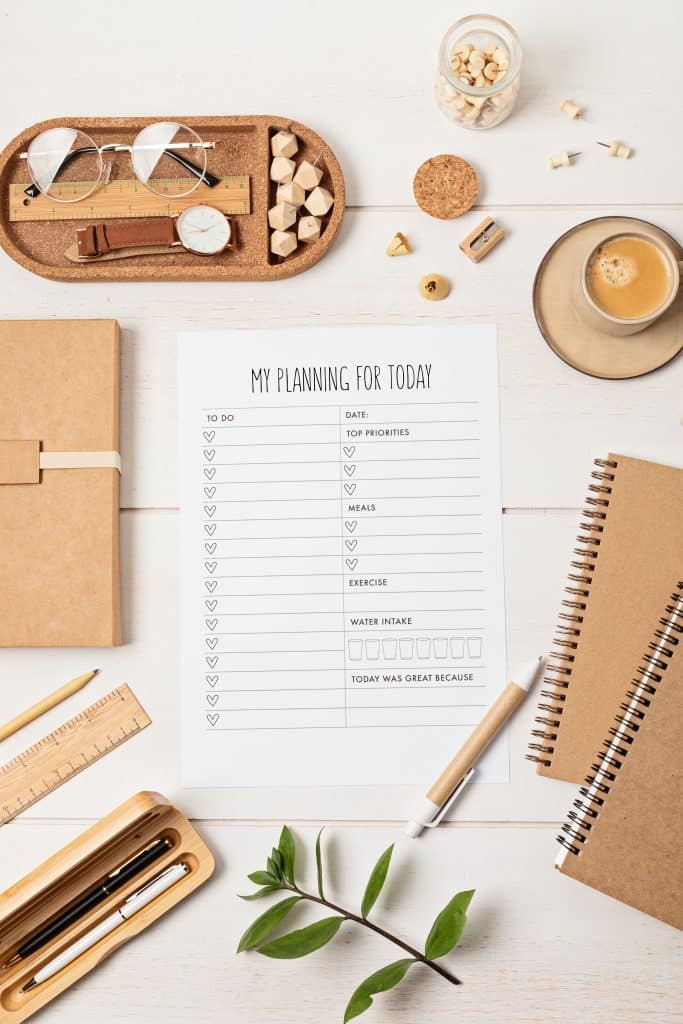
Why the Fancy Systems Fail
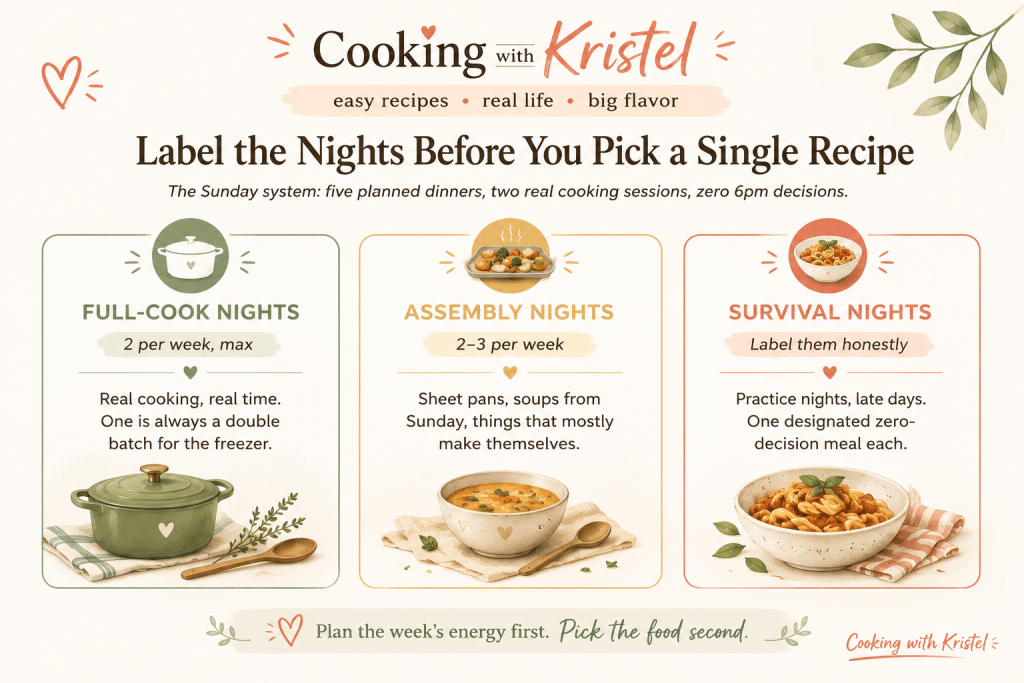
Every meal plan dies the same death: it plans meals instead of planning around your actual week. A beautiful Tuesday recipe means nothing if Tuesday is the day with soccer at 5:30 and homework meltdowns at 7. The fix that changed everything for me was planning energy first, food second.
So before any recipes, I label each night one of three ways. Full-cook nights are the two or three evenings I actually have time and patience. Assembly nights are for things that mostly put themselves together: sheet pan dinners, big salads, soup from the freezer. Survival nights are the truthfully-labeled disasters: practice nights, late meetings, the works.
Survival nights get planned too, and that’s the whole secret. A survival night with a designated easy meal is dinner; a survival night with a beautiful recipe assigned to it is a takeout order waiting to happen.
The Twenty-Minute Sunday
My actual routine, in order:
Minutes 1-5: fridge and pantry first. I plan from what’s already here before deciding what to buy, starting with whatever’s closest to going soft. Half my weekly dinners start as rescue missions, which is exactly how the fruits and veggies I turn into something new before they go bad became one of my most-used lists in my own kitchen.
Minutes 5-10: label the nights. Calendar open, every dinner slot gets full-cook, assembly, or survival. Be honest here. Optimism in this step is where meal plans go to die.
Minutes 10-15: fill the slots. Full-cook nights get the real cooking, and I always make one of them a double batch, because tonight’s soup is Thursday’s survival dinner. This is why the vegetables that turn one pot of soup into a whole week of dinners list exists: one pot on Sunday ends up staffing half my week. Assembly nights lean on the vegetables that make the best one-pan dinners in my house and the sheet-pan-and-30-minutes crew. Survival nights get exactly one designated meal each, chosen for zero decisions at 6pm.
Minutes 15-20: the list. Written in the order I walk the store, produce first. My produce section is basically on autopilot at this point because the staples I buy every week without checking the list are the same bones every single week; the plan just decides what dresses them up.
What a Real Week Looks Like
Because “label your nights” is abstract until you see one, here’s a genuinely typical week from my own calendar, imperfections included:
| Night | Label | What’s for dinner | Why |
|---|---|---|---|
| Sunday | Full-cook | Big soup pot, doubled | Slow afternoon, half goes to the freezer |
| Monday | Assembly | Sheet pan sausage-style veggies + rice | Decent evening, zero patience |
| Tuesday | Survival | Freezer chili from two weeks ago | Practice night, home at 6:15 |
| Wednesday | Full-cook | The one new recipe this week | Calmest weeknight we have |
| Thursday | Assembly | Soup from Sunday, grilled cheese | The double batch cashes in |
| Friday | Survival | Breakfast-for-dinner or pizza night | It’s Friday. Nobody’s cooking hard |
| Saturday | Unplanned | Leftovers, out, or whatever happens | Life eats this night anyway |
Notice what’s actually planned there: two real cooking sessions. That’s it. Everything else is assembly, reheating, or honesty. The weeks this system fails are always the weeks I got ambitious and scheduled four full-cook nights like a person I am not.
The Rules That Keep It Alive
Plan five dinners, not seven. Life eats one or two nights a week no matter what I plan. Leftovers, breakfast-for-dinner, and the freezer cover the gap, and planning for the gap beats pretending it won’t happen.
Repeat without shame. We eat the same eight or ten dinners in rotation with seasonal swaps, and nobody has ever once complained about taco night being taco night again. Novelty is a food-blogger value, not a family one. When I do experiment, it’s one new thing a week, on a full-cook night, next to a safe side, which is the same low-pressure approach that got us through my pickiest eater phase.
Cook once, eat twice. The double batch is the highest-leverage habit in this entire system. It also feeds lunches: half of the veggies that make the best leftover lunches straight from the fridge got on that list because they were Sunday’s extras.
Prep the second the groceries land. Ten minutes of washing and chopping when I get home from the store is worth an hour spread across the week; the fruits and veggies I prep the second I get home walks through exactly what earns that treatment and what stays whole.
The budget takes care of itself. I don’t run numbers or set food-spending targets, and I’m not going to tell you how to run yours. What I can say is that planning from the pantry, buying the produce that keeps my grocery bill from exploding, and grabbing the ugly discount-rack vegetables did more for our grocery spending than any coupon strategy I ever attempted, simply because planned food gets eaten and unplanned food gets thrown away.
The Shopping Trip Is Part of the System
The list written in store-walking order sounds like a small thing and saves me twenty minutes and three impulse purchases a trip, so here’s the fuller version. Produce gets shopped first and loosest, because that’s where I audible: if the discount-rack ugly vegetables have something good, the week’s assembly nights adjust on the spot, and a plan that can’t absorb a great markdown is a plan that costs money. The middle aisles get shopped exactly to the list, because the middle aisles are where lists go to die.
And anything that jumped into the cart unplanned gets one honest question at checkout: which night is this for? No night, no cart. That single question, asked consistently, changed our grocery receipts more than any strategy I’ve ever written about.
Two more trip-level habits that feed the plan. I shop once, not four times; every extra store trip is a fresh round of impulse exposure, and the plan exists precisely so Wednesday doesn’t require a store. And when I get home, the prep-immediately produce gets its ten minutes before the bags are even fully unpacked, because prepped produce is the difference between assembly nights taking fifteen minutes and taking forty.

The Failure Modes (And the Fix for Each)
After years of running this and hearing from other families trying it, the ways it breaks are extremely predictable:
| How it breaks | What actually happened | The fix |
|---|---|---|
| “We didn’t feel like Tuesday’s meal” | Plan treated as law, felt like a cage | Meals move between nights freely; only the labels stay put |
| Cooked Sunday, ordered out Wednesday | Too many full-cook nights scheduled | Two full-cook nights max until the habit is old |
| Bought everything, cooked nothing | Planned from recipes, not from the calendar | Label the nights BEFORE picking any food |
| Fridge full of dying produce Friday | Overbought at the loose produce stage | The rescue-mission audit: plan Monday around whatever’s fading |
| Quit after two weeks | System too pretty to maintain | Paper and pen. If it needs an app, it’s too heavy |
The pattern in every row: the plan fails when it demands more than the week actually had. Plan smaller than you think you should, and the system compounds instead of collapsing.
What Everyone's Making
23 Produce Staples I Buy Every Week Without Even Checking the List →

When the Plan Breaks (Because It Will)
The plan breaking isn’t failure, it’s Tuesday. When a full-cook night collapses, it swaps with a survival night; the meals move, the week holds. When everything collapses, the freezer stash from all those double batches is the plan. And when the week ends with orphan vegetables in the crisper, they become soup, frittata, or fried rice, which are less recipes than they are exit strategies.
The system’s entire job is making 6pm boring. Twenty minutes on Sunday buys seven evenings where dinner is a known answer instead of an open question, and after enough years of both versions, I can tell you the boring one is the good life.
Keep reading: 21 Fruits and Veggies I Turn Into Something New Before They Go Bad is the rescue-mission companion to this system, and 23 Vegetables That Turn Into Dinner With Just a Sheet Pan and 30 Minutes is my assembly-night starting lineup.