
The Substitution Method: How I Stopped Abandoning Recipes Over One Missing Ingredient
The old me, missing one ingredient at 5:45pm, had two moves: drag everyone to the store, or abandon the recipe entirely. The current me has ruined enough dinners and rescued enough others to know the actual secret about substitutions, which is that they’re not a list to memorize. They’re one question: what job was that ingredient doing?
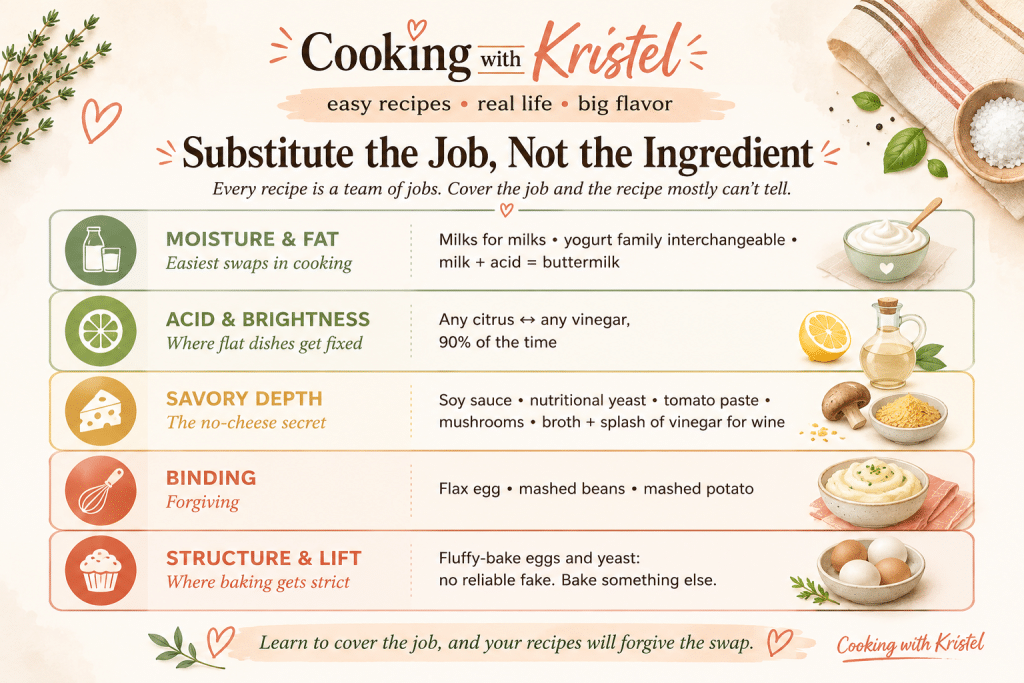
Once you ask about the job instead of the ingredient, most swaps become obvious, because a recipe is really just a team of jobs: something for structure, something for moisture, something for fat, something for acid, something for salt-and-savory, and something for lift. Cover the job, and the recipe mostly can’t tell the difference.
So this is my guide to swapping by job, with the honest notes about where it works, where it wobbles, and the handful of places where no substitution will save you.

The Moisture and Fat Jobs (The Easiest Swaps in Cooking)
If the missing ingredient was there to bring moisture or richness, relax: this is the most forgiving category in the kitchen. Milks swap for milks, including the plant kinds; oil swaps stay oil-for-oil in similar amounts; yogurt, sour cream, and buttermilk are one big interchangeable family of tangy-moist, and a spoon of lemon juice or vinegar into plain milk builds the buttermilk stand-in that half the internet’s pancakes secretly run on.
My dairy-free kitchen runs on this category daily. Coconut milk handles the cream jobs, and the produce doing creamy work, blended cauliflower, mashed avocado, pureed squash, carries more of our meals than any carton ever did, which is a big part of the story in the fruits and vegetables doing the heavy lifting in my dairy-free kitchen. The one caution: coconut milk brings coconut. In curry, wonderful. In mac sauce, a choice your kids will comment on.

The Acid and Savory Jobs (Where Flavor Actually Lives)
When a dish tastes flat and you can’t name why, the missing job is almost always acid. Lemon juice, lime juice, and every vinegar you own are one big interchangeable toolbox here: they don’t taste identical, but they all do the brightening job, and a dish that needed lemon will settle happily for rice vinegar ninety percent of the time.
The savory jobs trade the same way. Soy sauce covers missing salt-plus-depth almost anywhere; broth stands in for wine in a pan sauce with a splash of vinegar riding along for the missing brightness; tomato paste, mushrooms, and nutritional yeast are all pushing the same savory button from different angles.
That last one is the quiet hero of cooking without cheese, and the reason these vegetables have so much flavor you won’t miss the cheese isn’t an exaggeration in my house: the savory job got covered, so nobody went looking for the cheese.
The Structure and Lift Jobs (Where Baking Gets Strict)
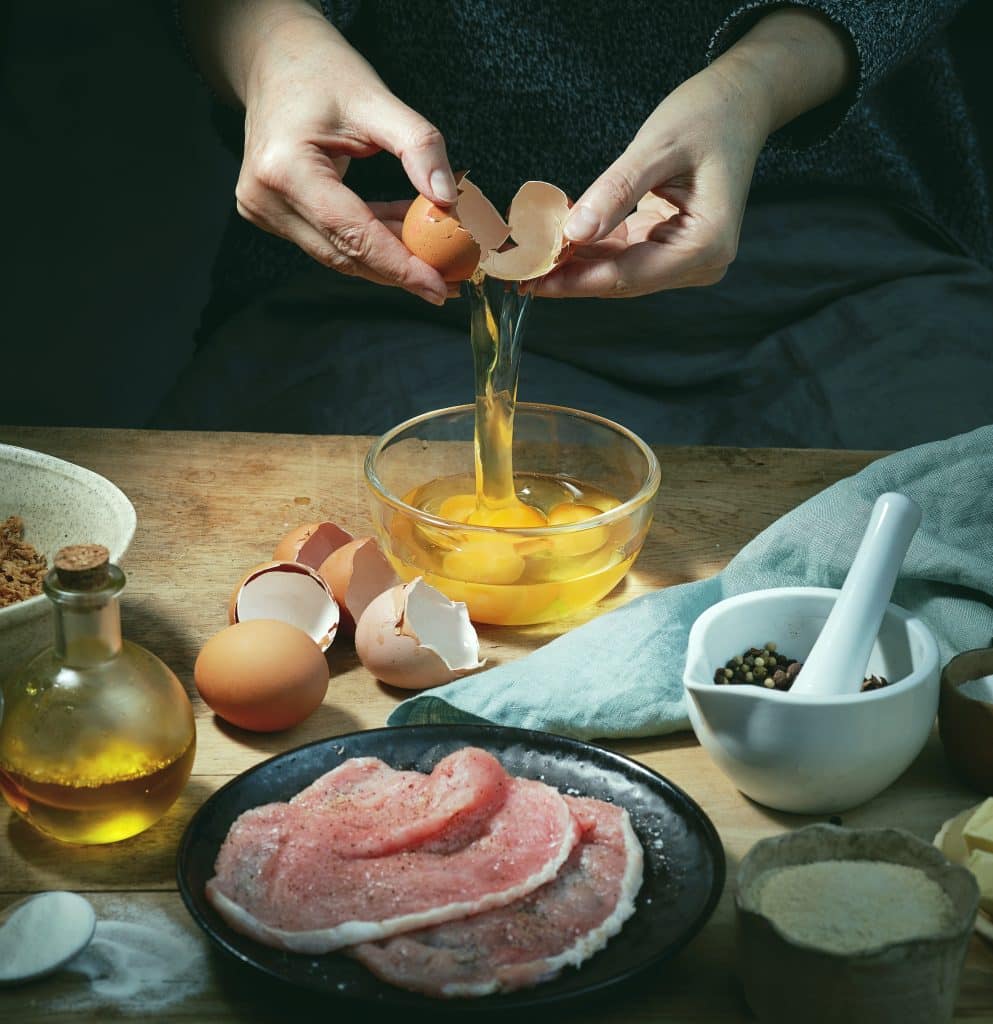
Now the honest part. Cooking is jazz; baking is chemistry class, and the structure and lift jobs are why. Eggs binding a meatball or fritter swap easily: mashed beans, a flax egg (a spoon of ground flax plus water, rested until goopy), even mashed potato will hold things together. Eggs doing the lifting in a light, fluffy bake are doing a job almost nothing fakes well past one or two eggs’ worth, and the recipes that lean hard on them are the ones I’ve learned to either make properly or make a different day.
Same strictness with the leaveners themselves: baking soda and baking powder are cousins, not twins, and while there’s an emergency conversion (roughly three parts powder to stand in for one part soda), a bake that matters deserves the real ingredient. Flours are the middle ground: all-purpose tolerates a partial swap toward whole wheat or oat flour with a denser, honest result, but wholesale flour substitutions in baking are their own science project and beyond an emergency-swap guide.
My rule of thumb after years of both triumphs and hockey-puck muffins: dinner substitutions are nearly always yes, baking substitutions are yes for moisture and binding, and caution-tape for structure and lift.
The Quick-Reference Card
Everything above, compressed into the card I’d tape inside a cabinet door. Find the job, not the ingredient:
| The job | You’re missing | Reach for instead |
|---|---|---|
| Moisture (tangy) | Buttermilk, yogurt, sour cream | Any of the others, or milk + spoon of acid, rested 5 min |
| Moisture (creamy) | Cream, milk | Coconut milk, oat milk, blended cauliflower or squash |
| Fat | Butter, a specific oil | Another neutral oil, similar amount |
| Acid / brightness | Lemon, lime, a vinegar | Any other vinegar or citrus |
| Savory depth | Wine in a pan sauce | Broth + splash of vinegar |
| Savory depth | Parmesan, cheese | Nutritional yeast, tomato paste, mushrooms, soy sauce |
| Salt + depth | Plain salt feels flat | Soy sauce |
| Binding | Egg (in meatballs, fritters) | Flax egg, mashed beans, mashed potato |
| Lift | Egg (in fluffy bakes), yeast | Nothing reliable past 1-2 eggs; bake something else |
| Emergency leavening | Baking soda | Roughly 3x baking powder (and skip added salt) |
| The vegetable | Fresh, in a cooked dish | Frozen, straight in, no apology |
| The onion | An actual onion | Onion powder and self-forgiveness |
The two rows in that table doing the most work in my kitchen are the savory-depth ones, because they’re the difference between dairy-free cooking that feels like subtraction and dairy-free cooking that just tastes good.
The Swap-in-Confidence Shortlist
The swaps I make so often they’re barely decisions anymore: buttermilk from milk-plus-acid. Any vinegar for any citrus in dressings. Broth for wine. Yogurt for sour cream and back. Frozen vegetables for fresh in anything cooked, no apology needed, and half of the vegetables that taste better the day after you cook them prove that vegetables are far less fragile than we treat them.
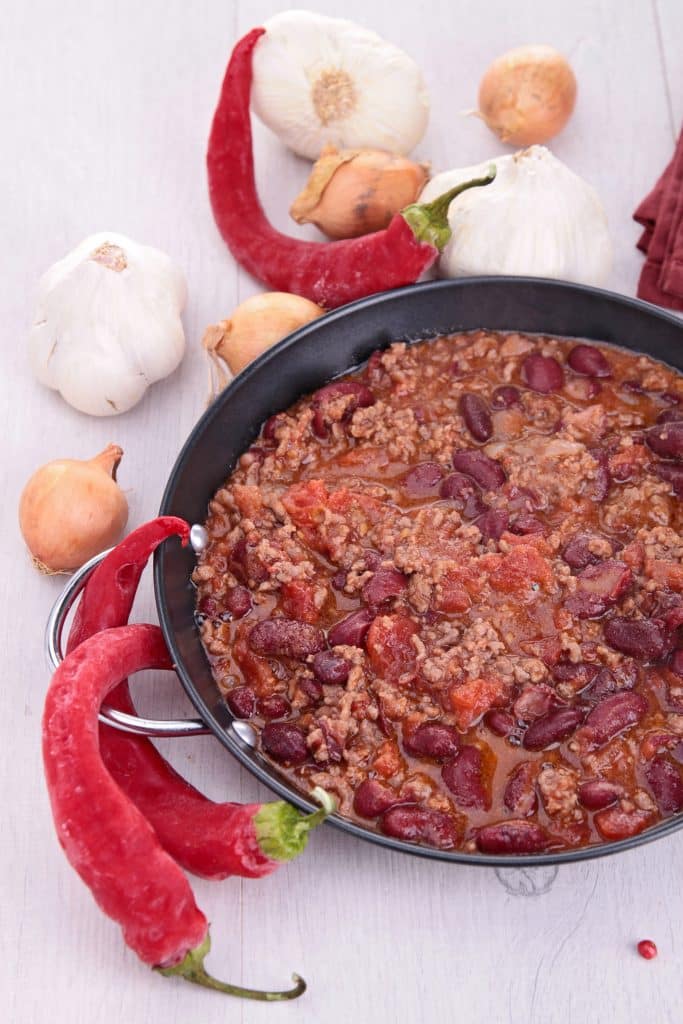
Beans for meat in chili and tacos, which is less a substitution than a grocery-budget strategy in a recipe costume, with the full roster in the plant foods I lean on for protein when meat’s not on the menu. Onion powder when there’s no onion and the will to chop one has left my body.
And the no-save list, learned the hard way: yeast (nothing fakes it, bake something else), the egg count in an egg-forward bake, and swapping the star of the show. A substitution covers a supporting actor’s job; when the missing ingredient IS the dish, that’s not a swap, it’s a different dinner, and different dinners are allowed.

Where the Method Pays Off Most: Weeknights
The reason this matters beyond baking emergencies is what it does to ordinary weeknight cooking. Once swaps are automatic, recipes stop being shopping lists and start being templates, which changes the whole grocery game: dinner gets planned from what’s already in the house, the Sunday planning system starts in the pantry instead of the cookbook, and the produce that’s fading gets drafted into whatever’s cooking tonight rather than waiting for its one designated recipe, which is half the trick behind turning fruits and veggies into something new before they go bad.
It also more or less ends the midweek store run, and I say this as someone whose midweek store runs never came home with only the one missing ingredient. The substitution method isn’t really about rescuing recipes. It’s about making the kitchen you already stocked sufficient, most nights, for the dinner you already planned, and letting the store wait until the list says otherwise.
The bigger thing this method gave me wasn’t rescued recipes, it was the confidence that recipes are suggestions with jobs inside them. The night I understood that was roughly the night documented across the 27 vegetables I finally learned to cook right after years of ruining them: the food was never as fragile as I thought. It just needed its jobs covered.
Keep reading: the substitution finder tool on the homepage handles the “what’s in my kitchen instead” lookup in one click, and 25 Vegetables That Taste Completely Different Depending on How You Cook Them is the companion lesson: sometimes the swap you need isn’t an ingredient, it’s a method.