
The Witching Hours: My System for the 3-to-6pm Stretch That Used to Eat Our Evenings
Every parent knows the stretch. School ends, and what walks through the door is not a child so much as a depleted battery with a backpack: hungry, fried, done with being told things, and carrying homework that must somehow happen before a dinner that must somehow get cooked.
Three to six pm was, for years, the part of our day most likely to end in tears from at least one person, occasionally me.
What fixed it wasn’t discipline or a better attitude, mine or theirs. It was treating the stretch like the predictable engineering problem it is: the same three hours arrive every school day with the same three collisions, hunger, depletion, and homework, all landing on the same parent who’s also supposed to produce dinner.
Solve the collisions separately and the witching hours mostly stop witching. Here’s the system.
The First 30 Minutes: Refuel and Decompress (Non-Negotiable)
The foundational discovery: nothing productive can happen in the first half hour home, and scheduling anything there is planning a fight. Kids come off a school day the way adults come off a hard shift, and the adult version of being handed a worksheet at the door would also go poorly.
So the first thirty minutes have exactly two jobs, done in this order.
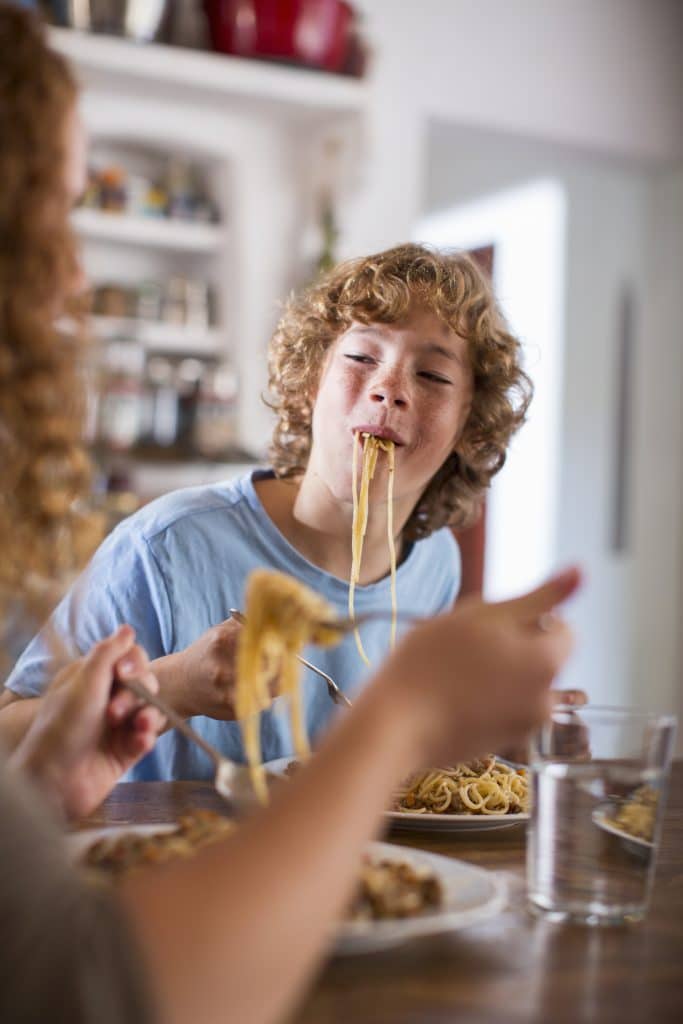
Food first, before any words that matter. A genuinely hungry kid cannot regulate, negotiate, or remember their own name, and half of what looks like attitude at 3:30 is blood sugar. The snack is staged before pickup so it happens on contact: the counter fruit doing its grab-it-yourself work, plus something with staying power off the fills-you-up-for-hours roster, because a snack that dies in twenty minutes just reschedules the meltdown.
The energy-snack lineup is built for exactly this window. Portioning matters too: enough to refuel, not enough to eat dinner’s appetite, a balance that the school lunch system’s waste audit taught me to calibrate kid by kid.
Then decompression, their way. Twenty-ish minutes of genuinely free time, outside, drawing, staring into the middle distance, with one house rule: it ends at a known time, announced once. The kids who “waste” this window fight the whole evening less.
The one thing that doesn’t count as decompression here is a screen, not for virtue reasons but for mechanical ones. Screens don’t end at known times without a battle, and the whole point of this window is entering the next one calm.

The Homework Anchor (Same Time, Same Place, Parent Optional)
Homework stopped being a nightly negotiation the day it stopped being scheduled by mood and got anchored: same start time every day (snack-plus-decompression’s known end), same spot, materials living there so setup is zero.
The anchor does what anchors did for our whole chore system: it removes the daily decision, and with it the daily debate. There’s nothing to negotiate with a clock.
The parent’s role during the anchor is nearby, not hovering. I’m in the kitchen (see next section), available for genuine stuck-ness, unavailable for the performance of helplessness that materializes when a parent sits down next to a worksheet.
Timing beats duration too. A tired kid doing forty distracted minutes learns less than a refueled kid doing twenty focused ones, which is the entire argument for the refuel window preceding it.
And on the truly fried days, the days you can see from the car line, homework gets triaged out loud: the must-do happens, the busywork gets a note to the teacher, and I stopped apologizing for that particular executive decision a long time ago.
The Parallel Kitchen (Where Dinner Stops Competing)
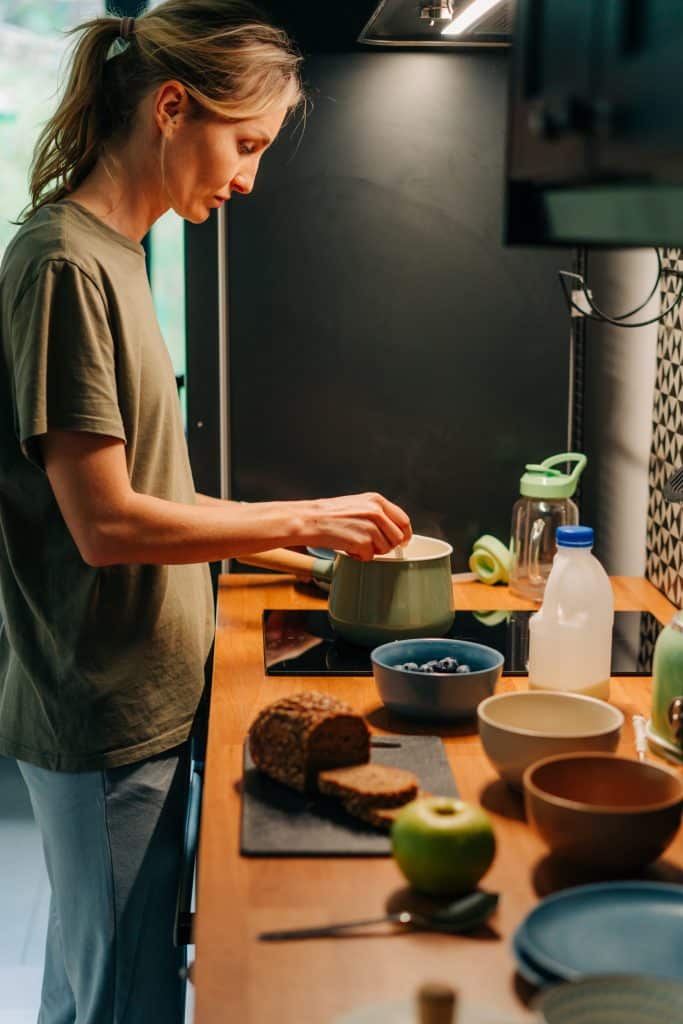
The third collision is that this whole stretch lands on the parent who’s also on dinner duty. The fix is that dinner prep runs parallel to the homework anchor instead of after it.
The anchor spot is in or near the kitchen on purpose: kids work, I cook, everyone’s together without being in each other’s business. The 5pm “I’m still at homework and haven’t started dinner” panic simply stopped existing, because the two now share a clock.
This only works because dinner itself got easy, which is the Sunday meal planning system doing its job. Weeknights in this stretch are assembly nights and survival nights by design: a one-pan dinner, Sunday’s soup cashing in, or a freezer tile from the time machine.
The witching hours are not the hours for ambitious cooking. Scheduling ambition there is how the whole tower falls on the exact day someone has a meltdown and the sauce breaks in sympathy.
The parallel kitchen also produces the stretch’s best byproduct: sideways conversation.
Kids narrate their day to a parent who’s chopping in a way they never do to a parent who’s asking. Some of the best debriefs this house has ever gotten happened over a cutting board, unprompted, at 4:40.
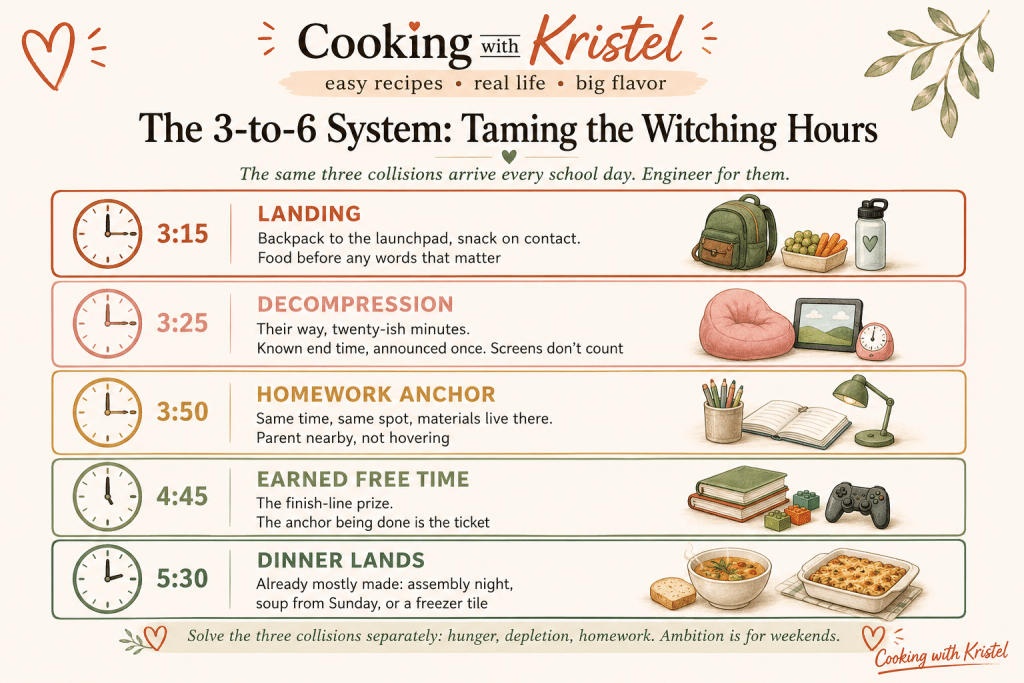
The Daily Shape, Start to Finish
| Time | What’s happening | The rule holding it up |
|---|---|---|
| 3:15-3:25 | Landing: backpack to the launchpad, snack on contact | Food before any words that matter |
| 3:25-3:50 | Decompression, their way | Known end time, announced once |
| 3:50-4:45 | Homework anchor + parallel kitchen | Same time, same spot, parent nearby not hovering |
| 4:45-5:30 | Free time earned by a done anchor | The finish-line prize, same as the morning machine |
| 5:30-6:00 | Dinner lands, already mostly made | Assembly nights only; ambition is for weekends |
Activity days compress the same shape rather than abandoning it: snack travels to the car, decompression IS the practice, and the anchor shrinks to must-do-only after.
The shape flexing is what keeps it from breaking, which regular readers will recognize as this house’s entire philosophy at this point.

Running It With More Than One Kid
One more section for the households running this with multiple kids and one adult, which is to say most of them: the system holds with multiples, but the windows need staggering. Ours land fifteen minutes apart by design (different pickups help; different snack timing works when they don’t), which means the landings don’t collide and the anchor starts as a rolling wave instead of a simultaneous demand for the same parent.
The decompression window is where sibling chaos wants to live, so it comes with one boundary: decompress together or apart, but the anchor clock is individual, and one kid’s meltdown doesn’t reschedule the other’s homework.
What Everyone's Making
27 Vegetables That Taste Better the Day After You Cook Them →
And on the days it all lands at once anyway, the triage order is fixed in advance so I’m not inventing it under fire: hungry kid first, upset kid second, homework last, dinner in whatever cracks remain. Fixed triage sounds cold and is the opposite. The kids know the order, which means being third isn’t a judgment, it’s Tuesday.
The honest report from the other side: three to six is still the day’s most loaded stretch, because it structurally is, and no system changes that. What changed is that the collisions stopped compounding.
The hungry kid gets fed before anything is asked of him, the fried kid gets to be fried on schedule, the homework has a home, and dinner was already half-solved on Sunday. The witching hours didn’t become magic. They became boring, and boring, as always around here, was the goal.
Keep reading: the school morning machine is this system’s morning twin, and 23 Plant Foods That Fill You Up for Hours is the after-school snack shelf’s sourcing list.