The School Lunch System: 180 Lunches a Year Without Losing Your Mind (Or the Battle)
A school year is roughly 180 lunches per child. Realizing that number is what broke me out of the nightly lunch scramble, because nothing you do 180 times a year should be improvised 180 times a year.
What replaced the scramble is a system with three parts: a formula instead of recipes, a Sunday component prep that makes assembly brainless, and a set of diplomatic rules for the hardest part, which was never the food. It was the negotiations.
Here’s the whole thing, tuned over multiple school years and at least two picky phases.
The Formula: Every Lunch Is the Same Lunch (Structurally)
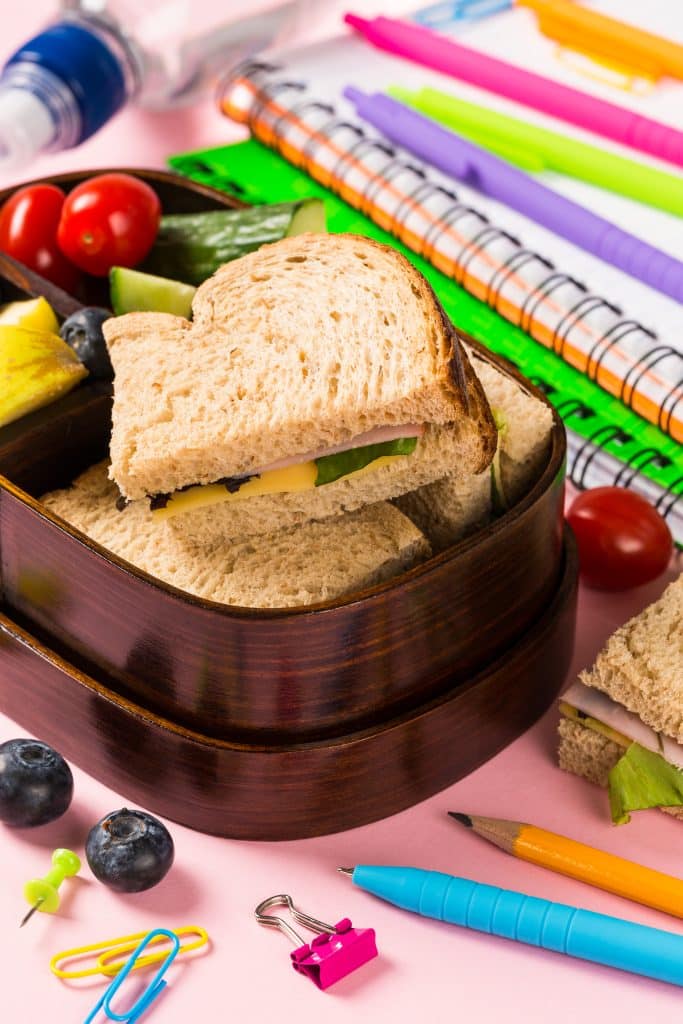
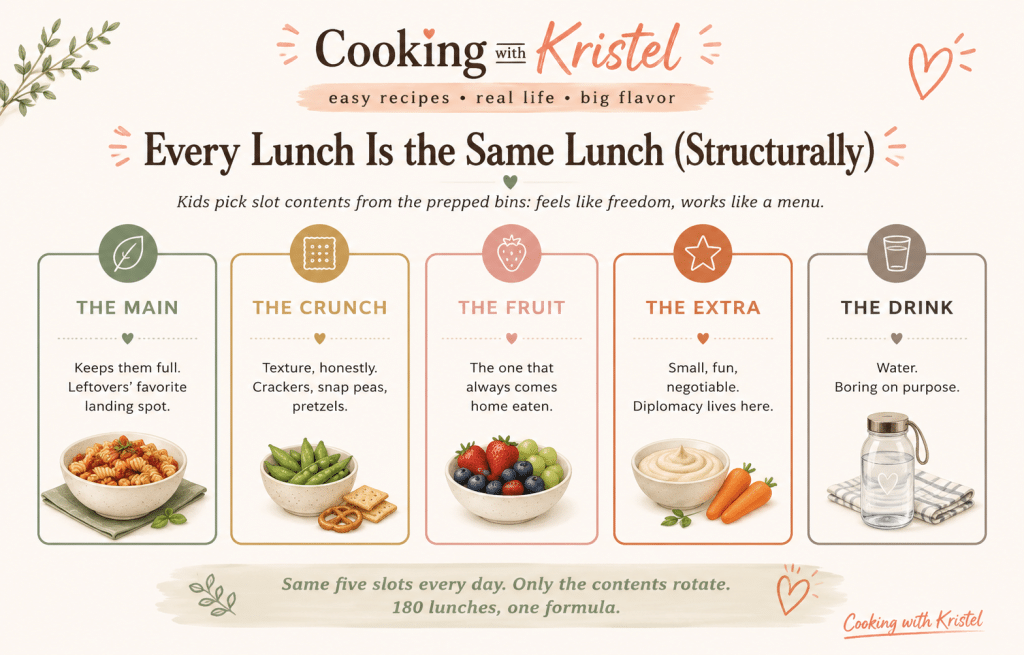
The single change that ended lunch decision fatigue: lunches stopped being planned as meals and started being filled as slots. Every lunchbox in this house gets the same five slots every day, and only the contents rotate:
| Slot | The job | Our usual suspects |
|---|---|---|
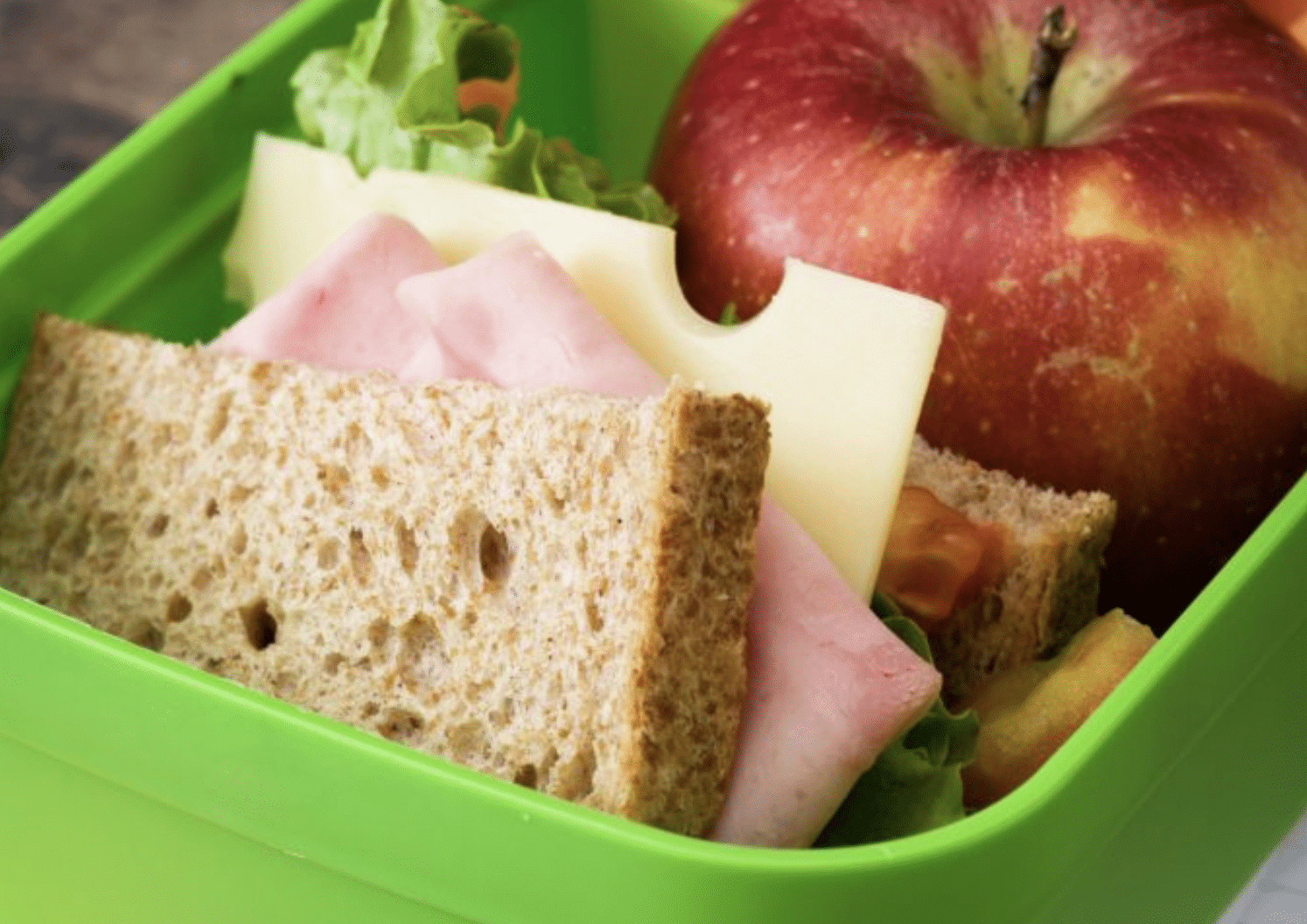
| The main | Keeps them full through afternoon | Sandwich, wrap, leftover pasta, quesadilla, hummus lunchable-style |
| The crunch | Texture, honestly | Crackers, pretzels, snap peas, the crunchy veg tier |
| The fruit | The one that always comes home eaten | Whatever’s on the counter rotation |
| The extra | Small, fun, negotiable | The treat-ish slot; doubles as leverage, see diplomacy |
| The drink | Water, almost always | The boring slot, on purpose |
Five slots means a kid can “pick lunch” by picking slot contents from what’s prepped, which feels like freedom to them and is actually a menu I control, the same benevolent-dictator trick running the breakfast rotation in our morning machine. It also means variety takes care of itself: rotate two slots a day and no two lunches in a week match, even though the system never changed.
The main slot leans hard on dinner’s leftovers, which is the system’s quiet budget engine. The veggies that make the best leftover lunches straight from the fridge plus anything that tastes better the day after mean Sunday’s cooking and Tuesday’s dinner are already Wednesday’s main, no extra cooking involved.
A thermos widened the leftover lane enormously: soup from the one-pot-of-soup lineup is a beloved cold-month main here, and it started as freezer tiles from the time machine.
Sunday: The Twenty-Minute Component Prep
Assembly is only brainless if the components are ready, so lunch prep is a small standing appendix to the Sunday routine:
- wash-and-cut the week’s crunch vegetables and fruit (the same session as the prep-it-the-second-it’s-home habit, just portioned lunch-size),
- portion the crackers-and-crunch into grab containers, make anything make-ahead (a batch of muffins or energy bites off the plant-based snack roster covers the extra slot for the week),
- and stage it all in one fridge bin and one pantry bin labeled, without irony, LUNCH.
The bins are the system’s load-bearing wall. Evening assembly becomes five grabs from two bins, which takes under five minutes, which means it reliably happens at night per the morning machine’s prime directive, and, at the right ages, means the kids can assemble their own, because the bins made every choice a pre-approved choice.
A kid packing their own lunch from curated bins is the entire chore, independence, and diplomacy program in one container system.
The Diplomacy Rules (For the Actual Hard Part)
The food was never the hard part. Here are the negotiation rules that ended most lunch conflict in this house, offered as what worked here rather than parenting instruction:
The kid votes on slots, not on the system. Input is real (they genuinely pick from the bins) and bounded (the bins are the ballot). Unbounded lunch requests are how you end up short-order cooking at 9pm.
New foods ride shotgun, never solo. Anything new goes in as a small portion next to a guaranteed-eaten lunch, zero pressure, allowed to come home uneaten as many times as it takes. It’s the lunchbox version of the exposure patience that got us through the pickiest eater phase, and the lunchbox is actually a gentler venue than the dinner table: no audience, no standoff, just a repeated quiet introduction.
The comeback report is neutral. Uneaten food gets noticed out loud without a trial: “the peppers came home, no big deal, want them again or swap the crunch?” The moment uneaten lunch becomes a offense, kids start managing your feelings instead of their appetite, usually via the trash can at school, and you lose your only data source.
Trades happen; plan for them. Kids trade lunches. Legislating against the lunchroom economy from your kitchen is a losing war; packing things sturdy enough to survive it is winnable.
The Gear Shelf (Short List, Strong Opinions)
Lunch systems attract gear the way kitchens attract gadgets, so here’s the honest inventory after years of testing:
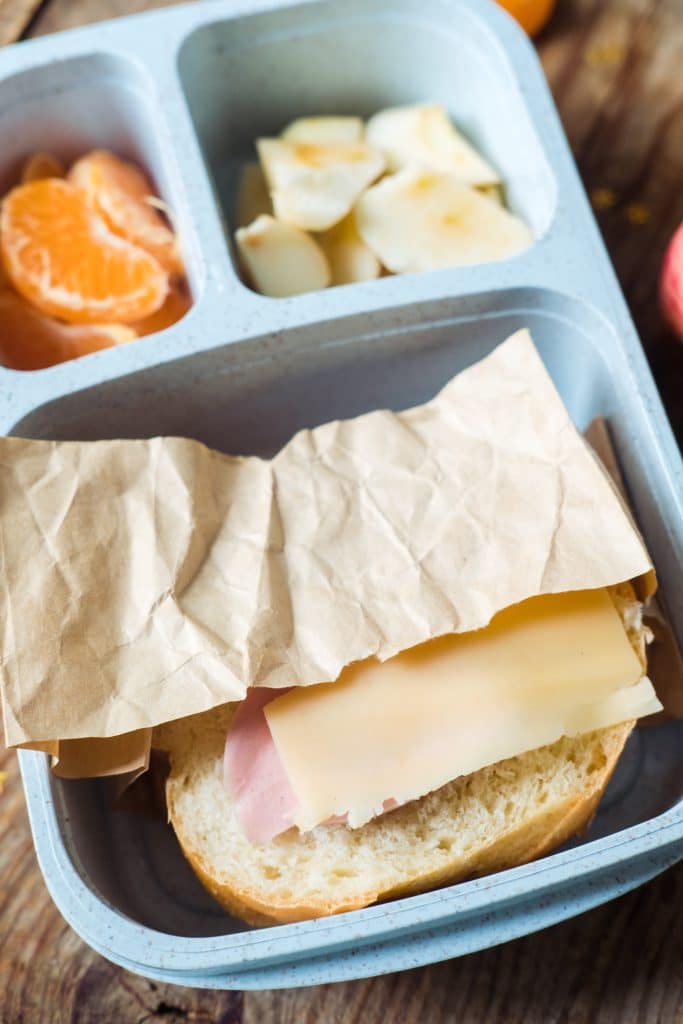
- A bento-style box with built-in compartments earns its keep purely because compartments ARE the five slots, made physical; kids fill them like a form. Two per kid, so one can be in the dishwasher without triggering a crisis.
- A decent thermos, tested at home with soup before its first away game, opens the entire leftover-lunch lane and pays for itself in not-buying-lunch within weeks.
- An ice pack that actually fits the bag, because food safety across a school morning matters and warm lunches come home uneaten anyway.
And that’s the list. The personalized bag matters to the kid and is worth the five minutes of letting them choose it; everything past that, the cutters, the picks, the accessory economy, is charming, optional, and mostly a phase, ours included.
The waste audit is the system’s feedback loop and deserves its own habit: once a month, I pay real attention to what’s coming home across a week, because the lunchbox tells the truth even when the kid doesn’t. A slot that keeps returning full isn’t a discipline problem, it’s data: wrong portion, wrong item, or a food that died socially (it happens; sandwiches have seasons).
Portions were my own biggest finding: kid lunch portions are smaller than parent instincts, and shrinking the main by a third ended most of our “didn’t eat lunch” mystery while the fruit slot, permanently demolished, earned its size increase. Adjust to the data, not the ideal, and the comebacks mostly stop.
Keeping It Interesting Across 180 Days
Even good systems get stale by February, so a few refresh levers stay in reserve. Seasonal rotation does most of the work automatically, since the fruit and crunch slots track what’s good and cheap, the same seasonal logic that keeps the grocery bill from exploding. A “build-it” main once a week (deconstructed anything: crackers-cheese-style stacks, dip boxes, wrap kits) reliably beats the same items pre-assembled, because assembly is entertainment.
What Everyone's Making
25 Fruits and Veggies That Survived My Pickiest Eater Phase →
A note or a terrible dad-joke on a napkin costs nothing and, per my sources, still lands in middle school as long as it’s inside the box where friends can’t see it. And once a term, the kid gets a full menu-change summit: twenty minutes of renegotiating the bins together, which refreshes the system and renews their stake in it.
The lunch system’s real product, like every system on this site, is the removal of a daily decision. 180 lunches became one formula, one Sunday prep, and a five-minute nightly assembly that kids increasingly run themselves, and the packing became so boring that we now argue about genuinely important things instead, like whose turn it is to feed the dog. Progress.
Keep reading: the school morning machine is where these lunches get deployed each day, and 21 Veggies That Make the Best Leftover Lunches is the main-slot cheat sheet.